Call 866.867.3123
Respond Property Solutions

Mold Remediation

Containment first. Then careful removal under negative pressure. Then air clearance testing before we tear it down. That is the IICRC S520 way.
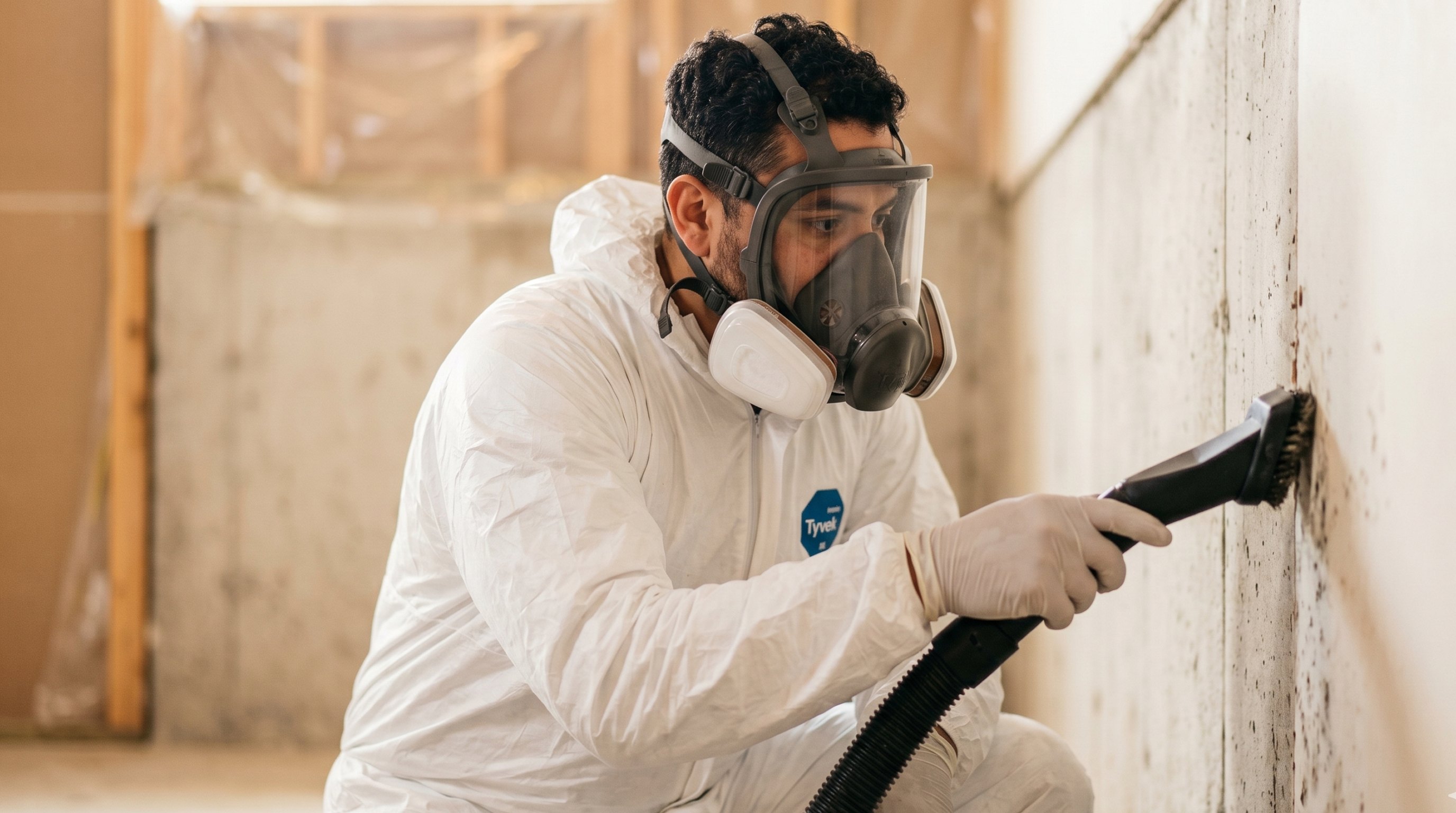
Mold remediation crew in protective suits removing contaminated drywall in a US home
Mold & Environmental

How Our Mold Remediation Service Works

Our remediation crews follow the IICRC S520 standard: full plastic containment, HEPA-filtered air scrubbers under negative pressure, controlled removal of affected materials, antimicrobial treatment, and clearance verification before reopening the space.

  • Plastic containment with HEPA negative air machines
  • Controlled removal of affected porous materials
  • HEPA vacuum cleaning of remaining surfaces
  • EPA-registered antimicrobial application
  • Post-remediation verification before rebuild
Request This Service
0
Regional Branches
0
Emergency Dispatch
0
Average Response Time
Understand the Problem

Why Mold Grows — and Why Removal Alone Never Fixes It

Mold needs three things: moisture, a food source, and time. Buildings supply the food permanently — drywall paper, wood, insulation facing are all cellulose. Growth can start within roughly 24 to 48 hours of wetting. The only variable you control is the water.

Moisture First, Always

Remediation that skips the moisture repair is scheduled to fail. We identify and correct the leak, intrusion, or humidity source before removal begins — because a dried, remediated wall with an active leak behind it is simply mold on a timer.

Health, Stated Honestly

Many people are sensitive to mold; exposure can trigger allergy-like symptoms and aggravate asthma, and some people are affected more than others. No one can promise a specific health outcome from remediation — but public health agencies agree that indoor mold growth should be removed, whatever the species.

Why "Spraying Bleach" Fails

Bleach is mostly water and its active ingredient cannot follow the colony into porous material. The stain fades, the roots remain, the added moisture helps regrowth, and the actual water source is untouched. S520 calls for removal, not repainting the problem.

The ANSI/IICRC S520 standard exists because disturbing mold releases orders of magnitude more spores than leaving it alone. Professional remediation is therefore an exercise in control: sealed containment, negative air pressure, HEPA filtration, controlled removal and bagging of colonized porous materials, detailed cleaning of what remains — and verification before the barriers come down.

Our Process

Remediation the S520 Way

Seven steps in strict order — each one protects the rest of your building.

1

Inspect & Moisture Map

Moisture meters and thermal imaging define the full extent of growth and trace the water to its source.

2

Correct the Moisture Source

The leak or humidity problem is repaired and affected materials dried — before any removal starts.

3

Build Containment

Sealed plastic barriers isolate the work area; HEPA-filtered negative air machines keep airflow moving in, never out.

4

Remove Colonized Materials

Affected drywall, insulation, and other porous materials are cut out, bagged inside containment, and removed under EPA-compliant disposal procedures.

5

HEPA Clean & Treat

Remaining surfaces are HEPA-vacuumed, damp-wiped, and treated with EPA-registered antimicrobials where appropriate.

6

Verify Clearance

Post-remediation verification — independent third-party testing where sampling is used — confirms the area meets normal conditions before containment comes down.

7

Rebuild

Removed materials are replaced under our Managed Repair program, so the same team carries the space back to finished condition.

IICRC certified technician in protective equipment preparing mold containment
Why Respond Property Solutions

Environmental Discipline, Regional Coverage

Mold work rewards patience and process. Our IICRC Certified crews follow S520 on every project — residential or commercial — across seven counties in Southern California and Western Arizona, with documentation your insurer and any future buyer can rely on.

  • IICRC S520-compliant containment and negative-air work
  • HEPA filtration and controlled disposal on every project
  • Independent third-party clearance recommended, never resisted
  • OSHA-trained personnel; licensed & insured
  • Single-contract rebuild after clearance
Request This Service
Project manager explaining mold remediation insurance documentation to a homeowner
Insurance Support

Mold Claims Hinge on the Cause of the Water

Mold that follows a sudden, covered water loss — a burst pipe, a failed water heater — is often covered, commonly up to a mold sublimit. Mold from a chronic leak, ongoing seepage, or deferred maintenance typically is not. Every policy reads differently, so treat any answer as policy-dependent. What we control is the evidence: moisture readings, photographs, and a documented cause-of-loss narrative in Xactimate format, with direct billing where available.

  • Cause-of-loss documentation adjusters can act on
  • Daily logs, photos, and clearance records in the claim file
  • Xactimate estimates and claim assistance
Visit the Insurance Resource Center
No-Cost Assessment

Free Mold Inspection

Remediation should never start from a guess. Begin with a free inspection and moisture assessment — you get the findings either way, with no obligation.

Mold Remediation Questions

Good to Know

On a small patch of a hard, non-porous surface like tile, careful cleaning can work. On drywall, wood, or anything porous, bleach removes the stain but not the colony, adds moisture, and leaves the water source in place — which is why the growth returns. Scrubbing also aerosolizes spores without containment. Larger or recurring growth belongs under an S520 process.

Because mold's only non-negotiable requirement is moisture, and regrowth can begin within 24 to 48 hours of re-wetting. Remediating first and fixing the leak later means paying for the same remediation twice. Moisture correction is step two of our process — before a single barrier goes up.

Often not. Sealed containment with negative air pressure is designed to let the rest of the building operate normally while the work area is isolated. Relocation is usually only discussed when the affected area includes essential spaces — the only kitchen or bathroom — or when occupants are particularly sensitive to mold.

Color does not indicate danger — many molds look black, and the much-discussed Stachybotrys is only one of them. Health responses vary by person, not just by species, and public health guidance is consistent: any indoor mold growth should be removed, and the removal process is the same regardless of what the lab names it.

Post-remediation verification while containment is still standing: visual inspection, moisture confirmation, and — where warranted — air or surface sampling analyzed by an accredited lab. We recommend an independent third party for sampled clearances so the remediator is never grading its own work. Barriers come down only after the space passes.

It depends on the cause. Mold traced to a sudden, covered water loss is often covered up to a mold sublimit; mold from chronic leaks or long-term humidity typically is not. It is genuinely policy-dependent — which is why our cause-of-loss documentation, moisture logs, and Xactimate estimates matter as much as the remediation itself.

Not if the moisture stays fixed. Spores are always present in ordinary air, so mold control is moisture control: keep indoor humidity in a normal range, repair leaks promptly, and dry any future water loss within the first day or two. That — not any chemical — is what keeps a remediated space clear.

Related

More Mold & Environmental Services
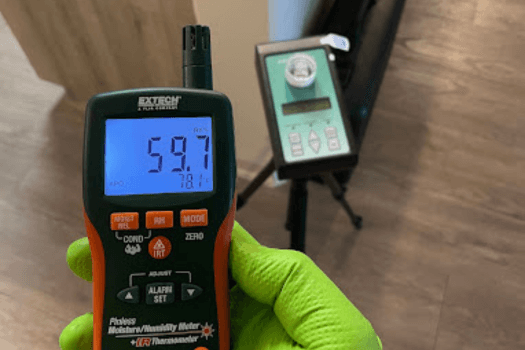
Mold inspector using moisture meter and air sampling equipment in a US home

Mold Inspection & Testing

Visible mold is half the story. Our inspections find the moisture source, the hidden growth, and the air quality impact before remediation begins.

Learn More

All Mold & Environmental Services

See every service we offer in the Mold & Environmental category.

View Category

Free Inspection

Every project starts with a free, documented inspection and moisture assessment — no obligation.

Schedule a Free Inspection
24/7/365 Response

Need Mold Remediation? Call Respond Property Solutions.

We respond 24/7/365 and arrive on-site within 2 to 4 hours.