Industrial Contamination
Large Loss and specialty commercial cleanup — engineered to mitigate hazardous waste, toxic chemical spills, and environmental contaminants in manufacturing and industrial settings.
How Our Industrial Contamination Service Works
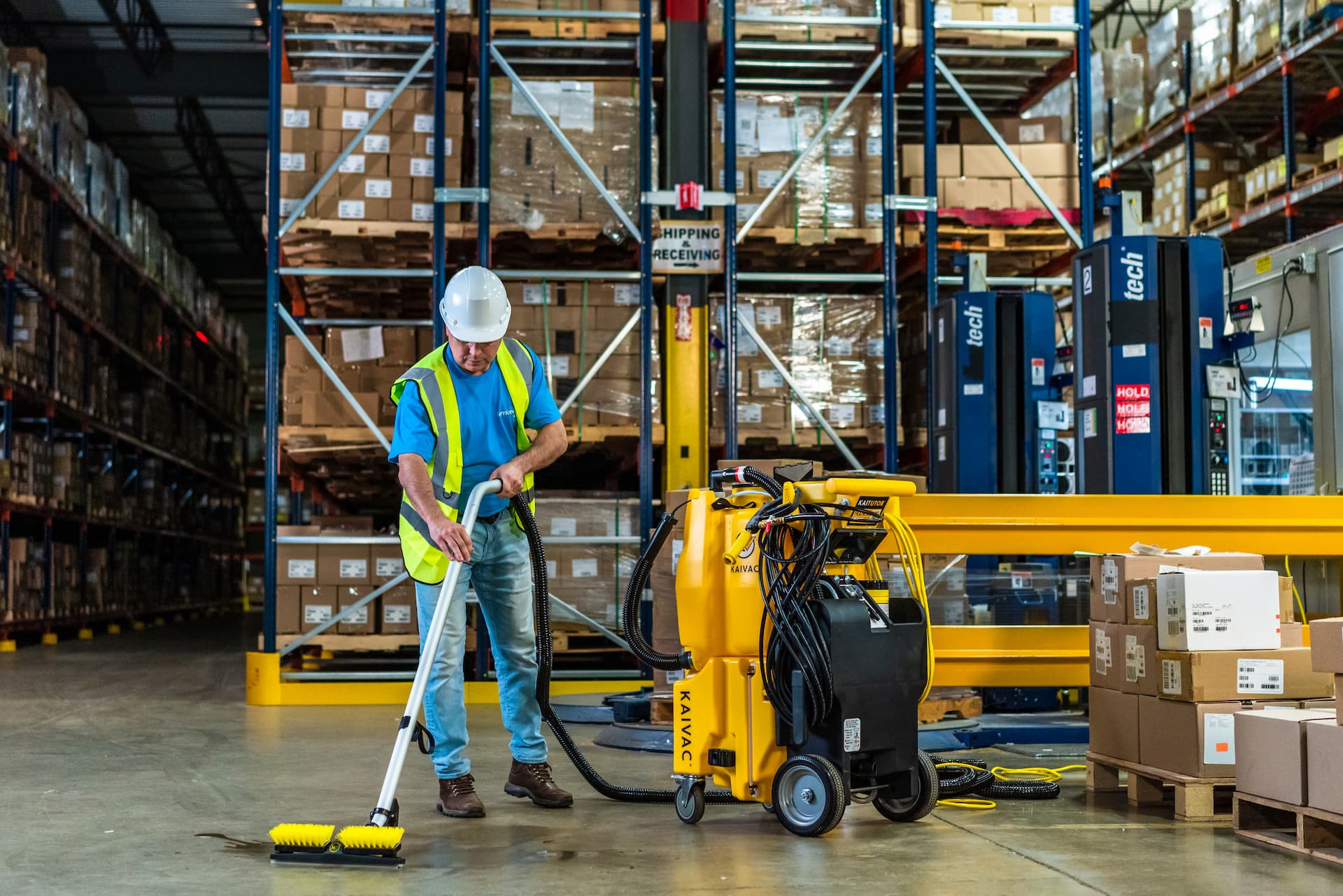
Industrial facilities don't fail in small ways. A solvent spill, a process leak, or a contained-area fire can leave a factory floor unsafe for hours or unrecoverable for weeks. Our large-loss commercial division mobilises with engineered containment, hazardous-material handling, and verified post-remediation testing — coordinated with your facility manager, your environmental engineer, and your carrier.
- Hazardous waste handling under EPA and OSHA standards
- Engineered containment for chemical and process spills
- Heavy-equipment decontamination and surface remediation
- Air monitoring and post-remediation verification testing
- Coordinated downtime planning to limit production loss
- Carrier and environmental-engineer reporting
Industrial Contamination, Defined
Environmental decontamination in an industrial setting is a different discipline from routine restoration. The contaminant chemistry, the regulatory posture, and the equipment at stake all change the plan. These are the loss types we are structured to handle.
Chemical & Solvent Spills
Process chemicals, solvents, and acids released onto floors, into trenches, or across equipment. Containment, neutralization or recovery, and surface decontamination — with air monitoring throughout.
Hydrocarbon Releases
Fuel, oil, and hydraulic-fluid releases in plants, yards, and warehouses. Recovery, degreasing, and remediation of impacted concrete and surfaces, with waste handled as regulated material.
Fire-Water Runoff & Combustion Residue
After an industrial fire, the runoff and soot are themselves contaminants. We remediate combustion residue on structure and equipment and manage contaminated water under EPA-compliant disposal procedures.
Process Water & Sewage Intrusion
Category 3 water in a production environment demands IICRC S500-guided extraction plus disinfection and verification — followed by industrial dehumidification to protect equipment and inventory from secondary corrosion and mold.
Particulate & Dust Contamination
Process dust and particulate migration into clean areas, control rooms, and HVAC systems. HEPA-filtered capture, negative-air containment, and duct-level cleaning restore controlled conditions.
Biological Contamination
Sewage-borne pathogens, gross filth, and biological hazards in industrial spaces, remediated by OSHA-trained personnel with verification sampling before reoccupancy.
The Industrial Decontamination Process
Industrial remediation succeeds or fails on sequence. Skipping characterization or containment doesn't save time — it converts one contaminated zone into several.
Emergency Assessment
HAZWOPER-trained personnel evaluate the release: what the contaminant is, where it has traveled, and what hazards it presents to people and process. Air monitoring starts here.
Containment & Isolation
Negative-air containment with HEPA filtration isolates the affected zone, with controlled entry points and decontamination lines so the contamination footprint stops growing.
Scope & Clearance Criteria
With your EHS team or environmental engineer, we agree the remediation scope and the measurable clearance criteria the finished work must meet.
Decontamination
Recovery, neutralization, surface remediation, and equipment decontamination — matched to the contaminant chemistry rather than a one-size-fits-all wash-down.
Waste Packaging & Transport
Regulated waste is characterized, packaged, labeled, and manifested under EPA-compliant disposal procedures and DOT transportation compliance, with chain-of-custody records for your files.
Drying & Environmental Control
Where water was involved, industrial dehumidification and monitored structural drying protect equipment, inventory, and the building envelope from secondary damage.
Verification & Closeout
Post-remediation sampling is compared against the agreed clearance criteria, and the full documentation package — photos, logs, manifests, results — is delivered to you, your regulators, and your insurer.

Built Around OSHA, EPA & DOT Requirements
An industrial contamination event sits inside a web of regulation, and the cleanup itself can create violations if it is done casually. Our crews and procedures are structured so the remediation strengthens your compliance position instead of complicating it.
- OSHA HAZWOPER-trained personnel (29 CFR 1910.120) on hazardous-material scopes
- EPA-compliant disposal procedures with documented chain of custody
- DOT transportation compliance for regulated waste leaving your site
- Negative-air containment and HEPA filtration on every contamination zone
- Air monitoring and post-remediation verification against agreed criteria
- ANSI/IICRC consensus standards (S500 water, S520 mold) where they apply
EHS Coordination & Documentation That Holds Up
On an industrial loss, we are one node in a larger structure — your EHS staff, environmental consultants, regulators, and carrier all need specific things from the remediation contractor. We deliver them without being chased.
EHS & Consultant Coordination
Your EHS team or industrial hygienist sets clearance criteria and regulatory strategy; we execute to those criteria and report in their format. One kickoff call establishes roles, hold points, and sign-offs.
Documentation for Regulators
Waste characterization records, manifests, air-monitoring logs, and verification sampling results — organized so a records request or agency inquiry can be answered from one file.
Documentation for Insurers
Photo documentation, equipment and drying logs, and Xactimate-compatible estimates where applicable, packaged as large loss management reporting your adjuster can act on quickly.

A Clean Claim File for a Complicated Loss
Industrial contamination claims often straddle property, equipment breakdown, and pollution-liability coverage. The way through is documentation: we record conditions before, during, and after remediation, log every piece of equipment and every disposal manifest, and bill direct with many major carriers so the financial side moves in parallel with the physical work.
- Direct insurance billing and adjuster coordination
- Xactimate-compatible estimates where the scope allows
- Chain-of-custody and disposal records included in the claim file
Assess the Facility Before You Commit to a Scope
A free on-site assessment gives your team a documented starting point: what is contaminated, what is defensibly clean, and what the remediation sequence should be. You keep the written findings whether or not you engage us.
Industrial Contamination Questions
Good to KnowHAZWOPER is the OSHA standard for Hazardous Waste Operations and Emergency Response (29 CFR 1910.120). It governs how personnel are trained to enter, assess, and remediate sites with hazardous substances — including PPE selection, air monitoring, decontamination lines, and emergency procedures. Sending non-HAZWOPER personnel into a contaminated industrial site creates regulatory exposure for the facility owner as well as the contractor.
Chemical and solvent spills, hydrocarbon releases, process-water and sewage intrusions, fire-water runoff, soot and combustion residue on equipment and structure, and particulate or biological contamination in production and warehouse environments. If a situation calls for capabilities beyond our scope, we say so and help you coordinate the right specialists.
Regulated waste is characterized, packaged, labeled, and transported under EPA-compliant disposal procedures and DOT transportation requirements, with manifests documenting the chain of custody from your floor to the disposal facility. You receive copies for your environmental records.
Usually, yes. We build negative-air containment with HEPA filtration around the affected zone, establish controlled entry and decontamination points, and agree traffic and logistics routes with your team so unaffected lines keep running.
Through post-remediation verification: surface and air sampling appropriate to the contaminant, compared against the clearance criteria agreed with your environmental engineer or industrial hygienist before work began. The results go into the closeout file alongside photos and disposal manifests.
Yes — that is the normal structure. Your EHS team or consultant typically sets clearance criteria and regulatory strategy; we execute the decontamination, containment, and disposal, and feed them the documentation they need for regulators and your insurer.
Coverage depends on your policy — property, equipment breakdown, and pollution-liability policies treat contamination differently. We document the loss thoroughly, provide Xactimate-compatible estimates where applicable, and work directly with your carrier and adjuster so coverage questions are answered from a complete file.
More Commercial & Industrial Services

Respond Commercial Water/Fire/Plumbing Recovery
Multi-family, hospitality, healthcare, schools — 24/7 mobilization, single project manager.
Learn More
Pre-loss Planning
Risk assessment, response coordination, and documentation to shorten recovery time.
Learn MoreIndustrial & Large Facilities
How we serve manufacturers, warehouses, plants, and large-scale operations.
View AudienceNeed Industrial-Scale Cleanup? Call Respond Property Solutions.
We respond 24/7/365 and arrive on-site within 2 to 4 hours.