Introduction
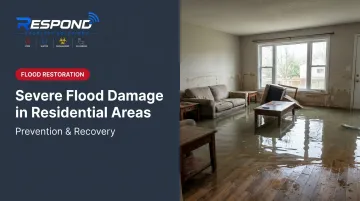
Flooding is the most common and most costly natural disaster in the United States — 90% of presidentially declared natural disasters involve flooding, and just one inch of water can cause roughly $25,000 in damage to a home.
Homeowners in Southern California and Arizona often assume they're in low-risk territory. That assumption is wrong. All 58 California counties have experienced at least one significant flood event in the past 25 years.
Arizona's monsoon season runs June 15 through September 30, bringing intense, localized flash flooding to desert communities that rarely see rain. Respond Property Solutions serves many of these communities across Imperial, Riverside, San Bernardino, and Yuma counties.
The challenge facing most homeowners is two-fold: preventing flood damage before it occurs, and responding correctly when prevention wasn't enough. Delayed or improper response dramatically increases repair costs and long-term health risks.
This guide covers flood damage severity, practical prevention steps, how to respond in the first critical hours, and what to know about flood insurance.
Key Takeaways
- 1 inch of floodwater can cause roughly $25,000 in damage — depth alone doesn't determine cost
- Mold growth begins within 24–48 hours if water isn't extracted and dried promptly
- Standard homeowners insurance does not cover flood damage; a separate NFIP policy is required
- NFIP policies carry a 30-day waiting period — don't wait until a storm is forecast to purchase coverage
- 29% of NFIP claims from 2014–2024 came from outside designated high-risk flood zones
What Is Considered Severe Flood Damage in a Home?
Flood damage in a residential context includes any physical harm to a home's structure, systems, or contents caused by external water intrusion — storm surge, surface runoff, or overflowing bodies of water. This is distinct from internal plumbing failures, which fall under a different claims and remediation category.
Water Contamination Categories
Not all floodwater carries the same risk. The IICRC S500 standard classifies water damage in three categories that directly affect how extensive remediation must be:
- Category 1 (Clean water): From a sanitary source; lowest contamination risk
- Category 2 (Grey water): Contains contaminants that can cause illness or discomfort upon exposure
- Category 3 (Black water): Grossly contaminated; can contain pathogenic or toxigenic agents. The IICRC's 2026 position statement identifies rising water from rivers or streams as a potential Category 3 source — but notes that not every weather-related water event automatically qualifies
Flood events that introduce sewage, riverine contamination, or chemical runoff require far more extensive remediation than clean-water intrusion.
What "Severe" Damage Actually Means
Property affected by flooding spans several categories:
- Structural elements: Foundation, wall framing, drywall, insulation
- Mechanical systems: HVAC, electrical panels, water heaters, furnaces
- Finishes: Flooring (carpet, hardwood, laminate), paint, cabinetry
- Personal property: Appliances, furniture, electronics, clothing
From a regulatory standpoint, FEMA defines substantial damage as repair costs that equal or exceed 50% of the structure's pre-damage market value. When that threshold is crossed, the building must be brought up to current code — which drives up total recovery costs.
The Secondary Damage Problem
Water that isn't extracted within 24–48 hours leads to mold growth, wood rot, and long-term structural compromise. According to the EPA's guidance on mold and moisture, drying wet materials within that window prevents mold from taking hold. Both the EPA and CDC align on this — once that window closes, the remediation scope expands well beyond what the initial water event created.
How Flood Depth Determines the Severity of Damage
Depth correlates directly with which home systems are at risk. The National Weather Service has documented clear safety thresholds that also reflect the physical realities of what water reaches at each level.
Safety Thresholds That Signal Structural Risk
| Water Depth | Verified Risk |
|---|---|
| 6 inches (moving) | Can knock down an adult — immediate evacuation risk |
| 12 inches (rushing) | Can carry away most passenger cars |
| 2 feet (rushing) | Can carry away SUVs and trucks |
These are NWS safety benchmarks, not engineering damage thresholds — but they illustrate why even shallow flooding poses serious danger before structural damage becomes the primary concern.
What Depth Means for Your Home's Systems
Those safety thresholds map almost directly onto structural damage risk. FEMA's Protecting Building Utility Systems guidance (FEMA P-348) is direct: electrical systems, HVAC, plumbing, and water heaters should be elevated or protected above anticipated flood levels.
Once any of these systems are submerged, even briefly, professional inspection and likely replacement are required before the home can be safely re-occupied.
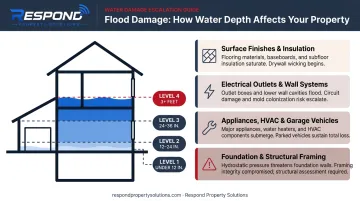
Here's how damage escalates as water rises:
- Under 12 inches: Surface finishes (carpet, hardwood, laminate, drywall) absorb water quickly and are typically unrecoverable. Insulation in wall cavities becomes saturated and must be removed
- 12–24 inches: Electrical outlets and components at or near floor level become compromised. Wall-mounted electrical systems at standard heights are reached relatively quickly
- 24–36 inches: Large appliances are submerged, HVAC equipment is damaged, and vehicles in garages can float and sustain engine damage
- At 3+ feet: Foundation and framing integrity may be compromised; a licensed structural engineer must assess the property before re-entry
The Real Cost of Flood Damage
The NFIP's most current data puts the average flood claim between $63,691 and $82,614 for 2020–2024, depending on the source. These figures account only for insured losses — uninsured homeowners face the full amount out of pocket.
Cost drivers include: contamination level, extent of damage across systems, local labor rates, materials affected, and whether mold remediation is required.
Flood Prevention Measures Every Homeowner Should Know
Understand Your Property's Flood Risk First
Start at FEMA's Flood Map Service Center — the official source for flood hazard mapping. Enter your address to find your flood zone designation and understand whether your property falls within a Special Flood Hazard Area (SFHA).
A property in an SFHA is in the 1% annual chance flood zone — which sounds reassuring until you understand what it means over time. A home in an SFHA carries a 26% probability of flooding over the life of a 30-year mortgage. That's not low risk.
Flood risk extends well beyond designated high-risk zones. From 2014 to 2024, 29% of NFIP claims came from moderate- or low-risk areas outside current high-risk designations.
For homeowners in Southern California and Arizona specifically, additional regional factors matter:
- Alluvial fan designations and proximity to washes or arroyos
- Flash flood zones not captured on standard FEMA maps
- Desert ground conditions — hardened, dry soil channels runoff rather than absorbing it
- Monsoon storm patterns that drop two inches of rain in under 30 minutes, overwhelming drainage systems
These risks often fall outside what standard flood maps show.
Structural and Property Retrofits
Once you know your risk, the next step is reducing it. Structural investments made before a flood event deliver returns that dwarf the cost of reactive repairs. Federal mitigation grants save $6 for every $1 spent on average, according to FEMA's Mitigation Saves data.
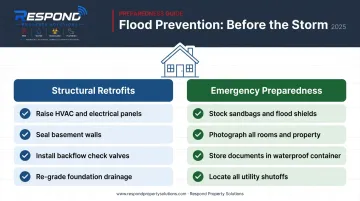
Prioritize these retrofits:
- Raise water heaters, furnaces, HVAC equipment, and electrical panels above the anticipated flood level for your zone
- Seal basement walls with waterproofing compounds rated for hydrostatic pressure
- Install backflow check valves on sewer lines to block sewage from reversing into the home during flooding
- Re-grade the ground around the foundation so surface runoff drains away from the structure, not toward it
For emergency preparedness:
- Keep sandbags, temporary flood shields for doorways, and plastic sheeting on hand before storm season
- Photograph and video all rooms, systems, and personal property — before any damage occurs
- Store insurance policies, mortgage documents, and IDs in a waterproof container or backed up digitally
- Know exactly where your water, gas, and electrical shutoffs are located
What to Do During and Immediately After a Flood
During the Flood: Safety First
Personal safety is non-negotiable. The property can be restored; the priorities during active flooding are:
- Do not walk through moving water. Six inches of fast-moving water can knock an adult off their feet
- Never drive into a flooded roadway. Twelve inches of rushing water can carry away most cars
- Evacuate when directed by local authorities — do not wait to gather belongings
- Move people and pets to upper floors or higher ground immediately
If water is approaching electrical outlets or appliances, shut off electricity at the main breaker panel. Also shut off gas if directed or if you suspect line damage. Flooded electrical systems present a real electrocution risk — do not re-energize until a professional has inspected the system.
Immediately After the Flood: The First 24–48 Hours
Do not re-enter until local authorities declare the area safe. Before stepping inside, inspect the exterior for visible structural damage — foundation cracks, shifted walls, sagging roof sections — that could indicate the home is unsafe to enter.
When you do enter, treat floodwater as a contamination hazard. Wear gloves, rubber boots, and an N95 mask as a baseline. Water that entered from external flooding may contain sewage, chemicals, and biological pathogens.
Documentation comes before cleanup:
- Photograph and video every affected room, system, and item
- Capture damage before moving, cleaning, or discarding anything
- Do not throw away damaged items until an adjuster or restoration professional has reviewed the scene — discarded items can't be claimed
Contact your insurer as soon as it's safe, then call a professional restoration company. Water extraction, structural drying, and mold prevention require industrial dehumidifiers, air movers, and moisture meters. DIY drying consistently leaves moisture trapped in wall cavities, where mold takes hold within days.
When speed matters, professional response makes the difference. Respond Property Solutions provides 24/7/365 emergency response across Southern California and Arizona, with IICRC-certified crews on-site within 2–4 hours of dispatch. Every job is assigned a single project manager from first call through final walkthrough — no juggling multiple contractors during an already stressful situation.
The Residential Flood Recovery Process
Professional restoration follows a defined sequence. Skipping or rushing any phase creates hidden problems that surface months later.
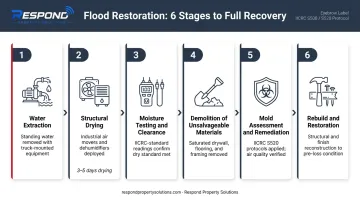
The Restoration Sequence
- Water extraction: Industrial pumps and vacuums remove standing water.
- Structural drying: Commercial air movers and dehumidifiers run continuously, typically 3–5 days.
- Moisture testing and clearance: Moisture meters and thermal imaging confirm drying is complete throughout structural assemblies, not just at the surface.
- Demolition of unsalvageable materials: Saturated drywall, insulation, and flooring that cannot be dried in place are removed.
- Mold assessment and remediation: If mold is present or conditions support growth, IICRC S520-compliant remediation is completed before any rebuild begins.
- Rebuild and restoration: Structural repairs, new materials, and finishes are installed.
Documentation and Insurance Coordination
Working with a restoration company that produces Xactimate-compatible damage scopes reduces claim delays and speeds up approvals. Respond Property Solutions begins full photo documentation and direct adjuster communication on-site before any mitigation work alters the damage state.
Their project managers hold agreements with major property insurers serving California and Arizona, and every scope is structured to meet adjuster requirements from the first submission.
Recovery Timelines
Timeline depends heavily on severity and how quickly professional remediation started:
| Damage Severity | Approximate Timeline |
|---|---|
| Minor flooding, no contamination | 1–2 weeks |
| Moderate flooding with system damage | 4–8 weeks |
| Severe flooding, structural damage, or mold | 3–6 months or longer |
Starting extraction and drying within the critical 24–48 hour window is the single biggest factor in compressing that timeline.
Flood Insurance: What Homeowners Need to Know
Standard homeowners insurance does not cover flood damage. A separate flood insurance policy — most commonly through the National Flood Insurance Program (NFIP) — is required for flood coverage.
The most important detail many homeowners miss: NFIP policies carry a 30-day waiting period before coverage takes effect. A policy purchased after a storm is forecast provides no protection for that event. Coverage needs to be in place well before storm season.
What NFIP Covers
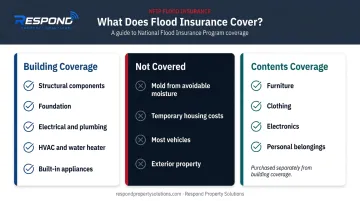
NFIP policies cover two separate components:
- Building coverage: Structural components, foundation, electrical and plumbing systems, HVAC, furnaces, water heaters, and built-in appliances
- Contents coverage: Personal belongings, furniture, clothing, and electronics. This component is purchased separately and is optional.
Renters can purchase contents-only flood insurance for up to $100,000 in coverage, even if the building owner doesn't carry structural coverage.
What NFIP does not cover: Mold damage from avoidable moisture, temporary housing or additional living expenses, most vehicles, and property outside the structure (decks, landscaping, pools).
Filing a Claim
Knowing your coverage is only half the equation — acting correctly after a flood protects your claim. When filing after a flood event:
- Notify your insurer as soon as it's safe to do so
- Do not clean up or discard items before documentation is complete
- Understand that adjusters may take time to arrive — professional restoration documentation becomes your primary evidence in the interim
- Be aware of FEMA's substantial damage rule: if repair costs exceed 50% of pre-flood market value, the structure must be rebuilt to current code, which can reshape total recovery costs
Frequently Asked Questions
What is the 100-year flood rule?
A "100-year flood" doesn't mean a flood that happens once a century. It refers to a flood level with a 1% chance of occurring in any given year — which translates to roughly a 26% probability over the life of a 30-year mortgage. Any property in a Special Flood Hazard Area (SFHA) meets this threshold.
What is considered flood damage in a home?
Flood damage is any harm to a home's structure, systems, or contents caused by external water intrusion — storm surge, surface runoff, or overflowing water sources. This includes structural damage, ruined flooring and drywall, compromised electrical and HVAC systems, destroyed appliances, and sewage contamination.
Will insurance pay out for severe flood damage in residential areas?
Standard homeowners insurance does not cover flood damage — a separate policy, typically through the NFIP, is required. Payouts depend on your coverage type (building vs. contents), documented damage, and whether the policy was active before the flood.
Can floods cause leptospirosis?
Yes. Floodwater can carry Leptospira bacteria from infected animal urine — especially rodents — and enter the body through skin cuts or mucous membranes. Wear full protective gear during cleanup and seek medical attention if flu-like symptoms develop within 2–30 days of exposure.
What should I do first after my home floods?
Confirm the home is structurally safe, wear protective gear, and shut off electricity at the breaker if water reached outlets. Document all damage with photos and video before touching anything, then contact your insurer and a restoration company immediately — extraction and drying must begin within 24–48 hours to prevent mold.
How long does it take to fully recover from severe flood damage?
Minor flooding may resolve in 1–2 weeks. Moderate structural damage typically takes 4–8 weeks. Severe flooding with mold or foundation damage can extend 3–6 months or longer. Beginning professional remediation as quickly as possible is the most effective way to compress the recovery timeline.