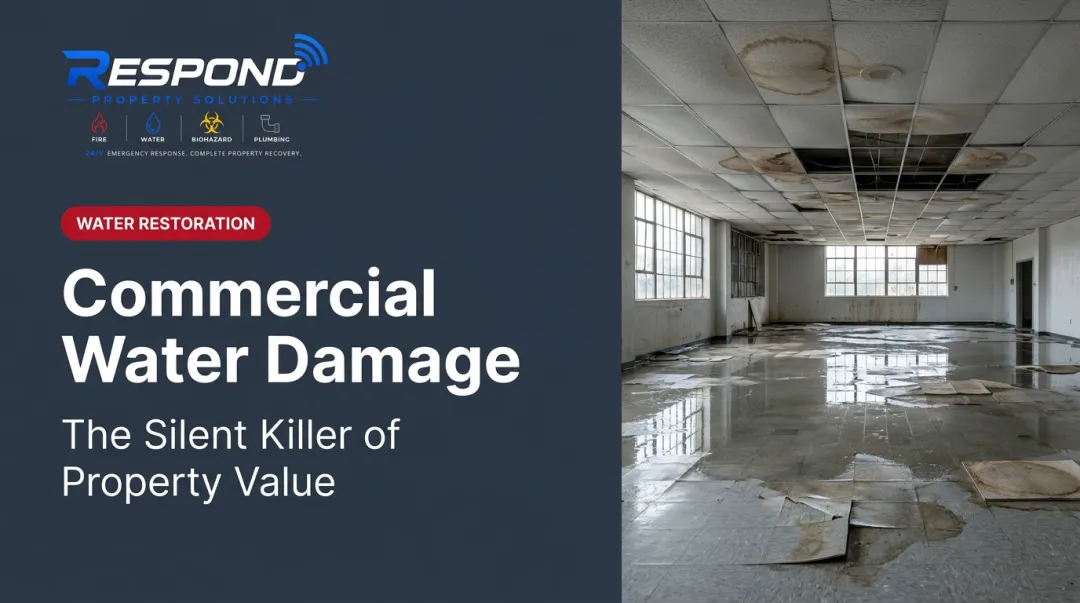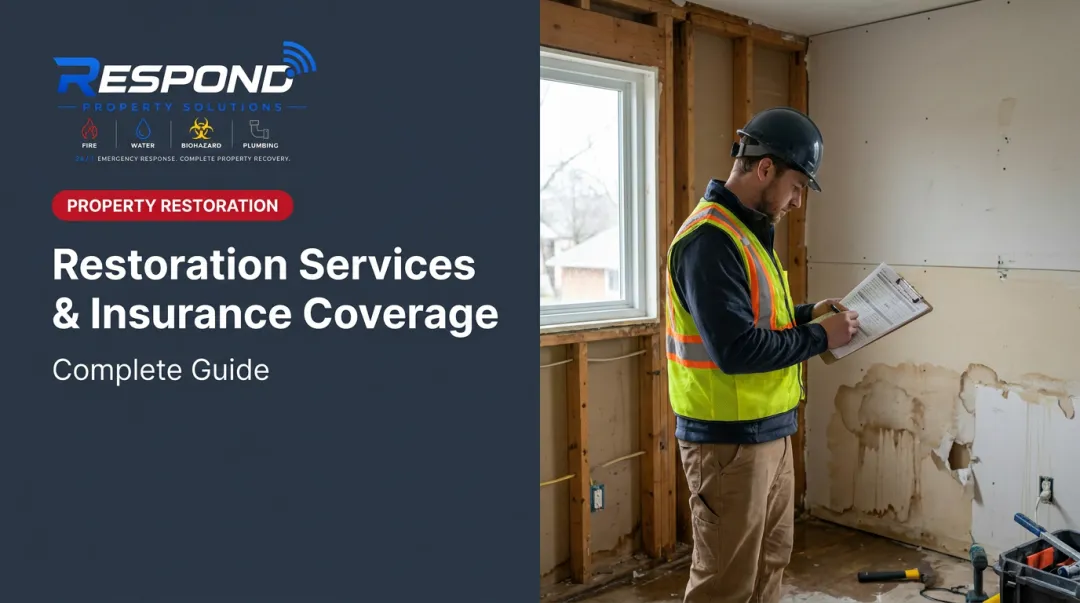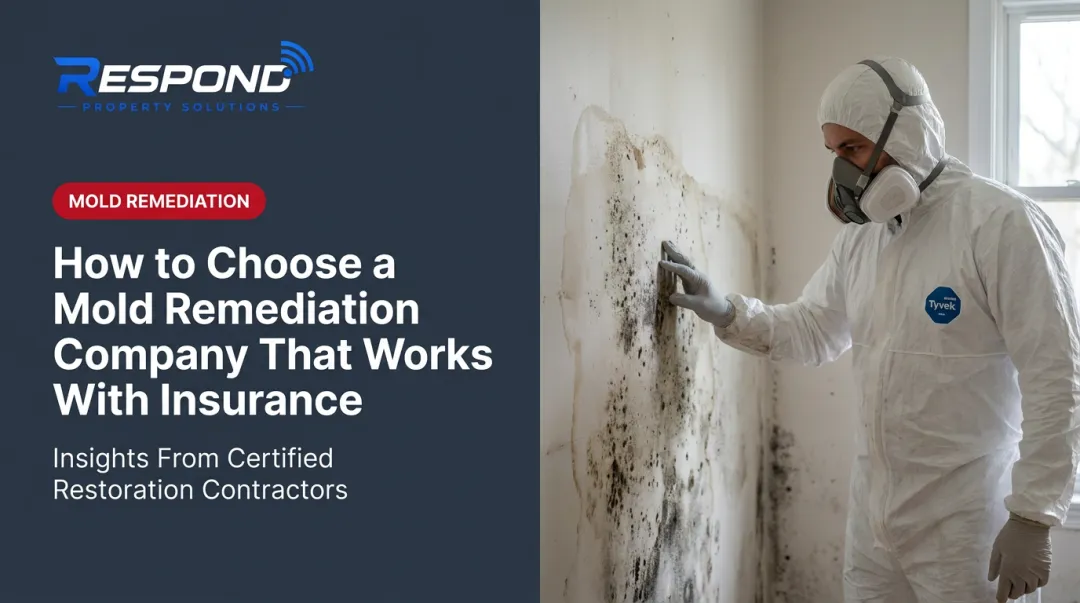
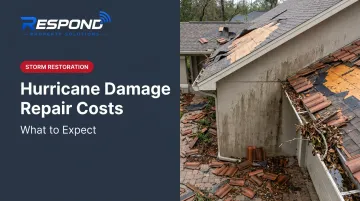
The range is wide. Minor wind damage can run $3,000–$8,000. Severe flooding and structural loss can easily push past $100,000. What surprises most owners isn't the initial damage — it's the secondary costs that emerge days later when water behind walls turns into mold, and a manageable repair becomes a full remediation project.
This guide breaks down cost ranges by damage severity, the variables that drive bills up or down, the hidden expenses most people overlook, and how to build a realistic repair budget before you ever sign a contract.
Key Takeaways
- Typical residential hurricane repair costs range from $3,000–$25,000+; severe flooding or structural damage can far exceed this
- Delayed mitigation is the biggest cost amplifier — water intrusion can trigger mold within 24–48 hours of initial exposure
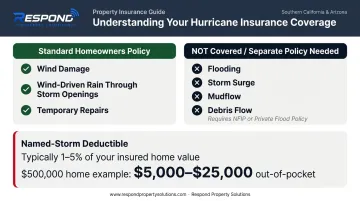
- Standard homeowners insurance covers wind damage but not flooding; flood coverage requires a separate policy
- Hidden costs: mold remediation, permit fees, and temporary housing can match or exceed the primary repair estimate
- Document everything and contact your adjuster early — it directly reduces out-of-pocket costs
How Much Does Hurricane Damage Repair Cost?
Hurricane repair has no fixed price tag. The final number depends on storm intensity, which systems were damaged, whether water entered the structure, and how fast mitigation began. A 24–48 hour delay in starting water extraction can transform a $6,000 repair into a $30,000 remediation project.
The most common budgeting mistake: homeowners account only for visible damage — missing shingles, broken windows — while missing water behind walls, compromised insulation, and mold that surfaces weeks later as expensive cost overruns.
The three tiers below cover the realistic cost ranges based on storm severity and damage scope.
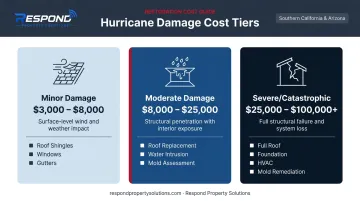
Minor Damage ($3,000–$8,000)
What's typically included:
- Partial roof shingle replacement
- Minor siding damage repair
- Broken window replacement
- Gutter reattachment and debris removal
- No interior flooding or structural compromise
Best for: Properties affected by Category 1–2 storms where wind was the primary damage mechanism and mitigation began quickly after the event.
Angi's 2026 data puts typical roof repairs at $394–$1,963, with a broad range up to $8,000 depending on extent — consistent with this tier for contained wind damage.
Moderate Damage ($8,000–$25,000)
What's typically included:
- Significant roof repair or partial replacement
- Siding panel replacement across multiple sections
- Multiple window replacements
- Interior water damage remediation (drywall, insulation, flooring)
- Emergency tarping and initial mold assessment
Category 3 impact with localized water intrusion typically lands here — multi-room remediation where the structure is intact but interior systems sustained real damage. A Verisk industry summary reported average residential roof replacement cost reached $17,631 in 2025. Roof replacement alone can push a project to the upper end of this range before interior work is factored in.
Severe or Catastrophic Damage ($25,000–$100,000+)
What's typically included:
- Full roof replacement
- Foundation assessment and structural rebuilding
- Complete mold remediation
- Electrical and HVAC repair or replacement
- Extended contents restoration and prolonged project timelines
Best for: Category 4–5 impact involving flooding, structural failure, or fire from storm damage. Commercial properties, multi-family units, and large-loss residential scenarios where multiple systems require simultaneous restoration. FEMA's National Flood Insurance Program reported an average NFIP claim of $63,691 for 2020–2024 — which means many severe-loss claims exceed that figure once structural and contents costs are combined.
Key Factors That Drive Hurricane Repair Costs Up or Down
Beyond storm category, several property-specific variables directly shape how large the final bill becomes. Understanding them helps owners set a realistic budget before a contractor sets foot on the property.
Storm Category and Wind Speed
Repair costs scale non-linearly with storm intensity. NOAA data shows that hurricane damage potential rises roughly 4x per category, following an eighth-power relationship — meaning doubling wind speed from 75 mph to 150 mph implies approximately 256 times the damage potential. Category 4–5 winds can compromise load-bearing walls and roof structures in ways that require engineering assessments before any repair work can begin, adding both cost and time to every phase that follows.
Extent and Type of Water Intrusion
Not all water damage is equal:
- Wind-driven rain — typically confined to breach points; easier to remediate when caught quickly
- Storm surge or flooding — penetrates deeper into structures, causes more widespread contamination, and is usually excluded from standard homeowners insurance
Standing water accelerates mold growth. Both the EPA and FEMA confirm that mold and mildew can develop within 24–48 hours of water exposure — making the hours immediately after a storm the most cost-critical window in the entire repair process.
Location and Post-Storm Labor Demand
Post-hurricane contractor demand inflates prices as much as it strains availability. A 2022 peer-reviewed study documented construction labor wages rising 20% after Hurricane Harvey and 67–100% during the 2004 Florida hurricane season.
In Southern California and Arizona, where tropical storms are infrequent, an additional challenge emerges: many local contractors lack large-scale storm restoration experience. Engaging a firm with demonstrated storm credentials and IICRC certification matters more in these markets than in hurricane-seasoned regions.
Property Age, Size, and Construction Type
Older properties with outdated wiring, non-impact-resistant windows, or legacy roofing materials cost more to repair simply because code compliance upgrades get triggered once permits are pulled. FEMA's substantial damage rule adds another layer: if repair costs exceed 50% of a building's market value, the structure must be brought into full floodplain management compliance — a requirement that can add tens of thousands to the total scope.
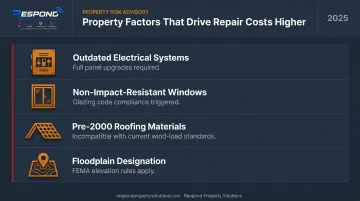
Key property factors that push costs higher include:
- Outdated electrical systems requiring full panel upgrades
- Non-impact-resistant windows that trigger glazing code compliance
- Pre-2000 roofing materials incompatible with current wind-load requirements
- Structures in designated floodplains subject to FEMA elevation rules
Speed of Initial Mitigation Response
Emergency mitigation — water extraction, emergency tarping, board-ups — is the single most cost-controlling action available after a storm. The faster it begins, the smaller the final bill. For property owners in Southern California and Arizona, Respond Property Solutions operates 24/7/365 with live dispatch, 45-minute answer times, and crews on-site within 2–4 hours from five regional branches — putting mitigation underway well within that critical window.
The Full Cost Picture: Hidden and Secondary Damage Costs
The repair estimate you receive in the first week after a hurricane rarely captures what the job will actually cost. Secondary damage categories are consistently underestimated — and frequently become the largest line items on the final invoice.
Mold Remediation
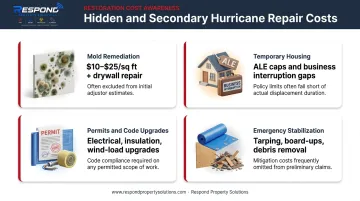
Any water intrusion — even a minor roof leak — creates conditions for mold growth. Professional mold remediation typically runs $10–$25 per square foot, with drywall repair afterward adding another $1,000–$2,900 per affected area. The longer mold goes untreated, the more structural material requires removal.
Mold discovered during repairs can also trigger a separate insurance claim process, extend the project timeline, and require air-quality clearance testing before reoccupancy. IICRC S520-certified contractors — including Respond Property Solutions — handle this from inspection through clearance, providing the documentation adjusters need to process it as a standalone claim if warranted.
Temporary Housing and Business Interruption
If a property becomes uninhabitable during repairs:
- Residential owners may qualify for Additional Living Expenses (ALE) coverage under their homeowners policy — but these provisions have caps and eligibility requirements most owners don't discover until after a loss
- Commercial property managers face business interruption losses that may be partially covered under business interruption riders, again subject to limits and conditions
Check your policy's ALE or BI provisions before a storm, not during recovery.
Permit Fees and Code Compliance Upgrades
Major hurricane repairs require permits. Once permitted work begins on an older property, code compliance upgrades are frequently triggered: electrical panel replacements, updated insulation standards, wind-load requirements. These mandatory upgrades are legitimate and non-negotiable costs, but they are almost never included in an initial damage estimate.
In San Diego, the city distinguishes between minor repairs using a Simple Permit and more extensive damage requiring engineering plans — a process that adds time and cost to any project that crosses the threshold.
Debris Removal and Emergency Stabilization
Immediate post-storm services must be completed before structural repair can begin. These costs accumulate quickly and are rarely included in early estimates — budget for them upfront.
Common emergency line items include:
- Emergency tarping and board-ups — window boarding averages around $250 per opening
- Tree removal and debris hauling — costs vary by volume and access
- Structural stabilization — temporary shoring or bracing before full repair begins
Insurance, FEMA, and Funding Your Repairs
The Wind vs. Flood Coverage Gap
The most important insurance gap property owners need to understand: standard homeowners insurance covers hurricane wind damage but does not cover flooding. Flood damage requires a separate policy, typically purchased through FEMA's National Flood Insurance Program (NFIP).
The California Department of Insurance confirmed this distinction directly after Tropical Storm Hilary — property policies may cover wind-driven rain entering through storm-created openings, but flooding, mudflow, and debris flow generally require separate flood coverage. This gap is frequently discovered after a loss, leaving owners with uncovered costs they assumed were included.
Also check whether your policy includes a hurricane or named-storm deductible — a separate deductible that applies specifically to hurricane damage and typically runs 1–5% of the insured value of your home, per the Insurance Information Institute. On a $500,000 home, that's a $5,000–$25,000 out-of-pocket exposure before insurance pays a dollar.
What FEMA Actually Covers
FEMA's Individuals and Households Program (IHP) provides financial assistance in federally declared disaster areas, but it supplements insurance rather than replacing it. For disasters declared on or after October 1, 2024, the maximum IHP assistance is $43,600 for housing and $43,600 for other needs.
Keep these constraints in mind before counting on FEMA:
- FEMA won't pay for costs already covered by your insurance policy
- Insured applicants must file with their carrier before FEMA will consider the gap
- IHP assistance covers basic needs, not full reconstruction costs
How Documentation Affects Your Claim
Working with a restoration company that produces Xactimate-compatible documentation and coordinates directly with insurance adjusters from the first call can be the difference between a smooth claim and a disputed one.
Respond Property Solutions begins damage scopes, photo documentation, and direct adjuster communication at minute one — before mitigation is complete. Claims that capture the full damage scope upfront avoid the costly disputes that surface when hidden damage appears mid-project.
How to Budget Smarter for Hurricane Damage Repairs
An accurate hurricane repair budget must account for more than the visible damage. Build in these elements from the start:
- 15–20% contingency for secondary damage discovered during the repair process
- Permit fees — variable by jurisdiction, often overlooked in initial estimates
- Temporary housing costs if applicable, and the gap between ALE coverage caps and actual costs
- Replacement cost shortfall: what insurance pays versus actual costs in today's labor and materials market
To price these line items accurately, start with a professional damage assessment — not just a visual walkthrough. Thermal imaging, moisture mapping, and air quality testing reveal water intrusion and mold behind walls and in sub-floors that a standard contractor walkthrough will miss entirely.
Respond Property Solutions offers a free on-site inspection covering all three methods, producing an insurer-ready scope the property owner keeps regardless of next steps.
The fastest way to control total repair costs is to start mitigation within hours of the storm passing. With five branches across Southern California and Arizona, Respond Property Solutions crews reach most service-area properties within the critical 2–4 hour window, stopping the water damage cascade before it compounds into a far larger project.
Frequently Asked Questions
How much does it cost to repair after a hurricane?
Most residential hurricane repairs fall between $3,000–$25,000+ depending on storm severity and damage type. Properties with significant flooding, structural damage, or mold involvement — and commercial or multi-family properties — can push well above this range, particularly when mitigation was delayed.
Does FEMA pay for hurricane damage?
FEMA may provide financial assistance through its Individuals and Households Program in federally declared disaster areas, with maximums of $43,600 for housing and $43,600 for other needs (for disasters declared on or after October 1, 2024). It supplements insurance, not replaces it. Insured applicants must work through their carrier first before FEMA assistance is applied.
What happens if your house gets ruined in a hurricane?
Confirm structural safety before re-entering, then document all damage thoroughly with photos and video before any cleanup begins. Contact your insurer immediately to open a claim, and call a licensed restoration professional for emergency mitigation — the faster water is extracted and the property stabilized, the lower your total repair cost will be.
Does homeowners insurance cover hurricane damage?
Most standard policies cover wind damage from hurricanes but exclude flood damage, which typically requires a separate NFIP or private flood policy. Also check whether your policy includes a named-storm or hurricane deductible, typically 1–5% of insured home value. This is separate from your standard deductible and can represent a significant out-of-pocket cost.
How long does hurricane damage repair typically take?
Minor wind damage may take days to a few weeks. Moderate damage involving water intrusion and mold remediation typically runs 1–3 months. Severe structural damage can take 6 months to over a year, depending on engineering requirements, permit timelines, and contractor availability in the aftermath of a regional storm event.
What should I do first after hurricane damage to my home?
Prioritize speed. Every hour that passes after water enters a structure allows moisture to penetrate deeper and mold to take hold, both of which drive up remediation costs. Once it's safe to re-enter, get a restoration crew on-site the same day — not the next morning.