Many homeowners pick whoever calls back first or offers the lowest number. That approach works fine for hiring a plumber. For an insurance-covered mold loss, it's a fast path to a disputed claim, underpayment, or outright denial.
This guide focuses specifically on the insurance angle—what to look for in a mold remediation company that can produce the documentation, follow the protocols, and communicate directly with adjusters in a way that supports a clean claim outcome.
Key Takeaways
- Homeowners insurance may cover mold—but only when a qualified company provides proper documentation of a covered water event.
- IICRC certification and Xactimate-compatible scopes are the two credentials most directly tied to insurance claim acceptance.
- A company that communicates directly with adjusters and begins mitigation promptly gives you the best shot at full coverage.
- Red flags: quotes without a site inspection or vague scope descriptions that won't survive adjuster review.
- Single-company accountability across documentation, mitigation, and adjuster coordination closes the gaps that cause claim disputes.
What Mold Remediation Really Involves—and Why Insurance Companies Care
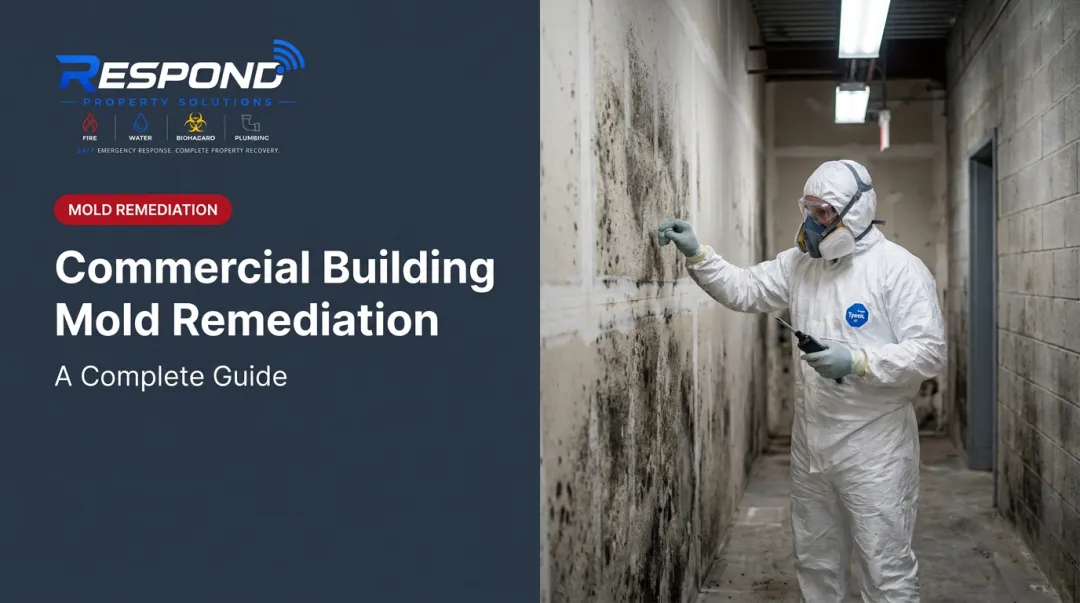
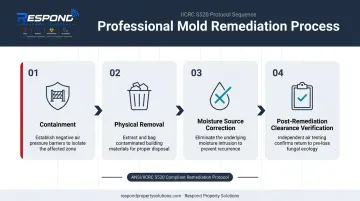
Mold remediation is not surface cleaning or chemical fogging. It's a structured process involving:
- Containment of the affected area to prevent spore spread
- Physical removal of contaminated materials (not just treatment)
- Correction of the underlying moisture source
- Post-remediation clearance verification to confirm the work is complete
Insurance companies scrutinize this process because they need documented evidence that work met recognized standards before releasing payment. The ANSI/IICRC S520 Standard for Professional Mold Remediation (currently in its 2024 Fourth Edition) is the ANSI-accredited industry protocol that defines those procedures. Remediation that skips any of these steps gives adjusters grounds to delay or deny payment outright.
Assessment vs. Remediation: Why Separation Matters
Mold assessment (inspecting and testing) and mold remediation (the physical removal work) should generally be handled by separate parties. Combining both in one company raises credibility questions with insurers—the entity certifying that the work was done correctly is the same one that got paid to do it.
In Texas, this isn't just a best practice. Texas Occupations Code Section 1958.155 explicitly prohibits a license holder from performing both mold assessment and mold remediation on the same project. California has no equivalent state mold licensing requirement, but the conflict-of-interest concern applies just as directly to California policyholders filing insurance claims.
That credibility gap matters even more when time is a factor—which brings us to how quickly remediation needs to begin.
The Policy Window Reality
Most standard homeowners policies require water damage and mold to be reported and addressed promptly—the NAIC advises notifying your insurer as soon as possible after a loss. The EPA confirms that mold begins forming within 24–48 hours of water exposure. A company that responds fast and documents from day one reduces the risk of a denial based on delayed action. Timeframe requirements vary by carrier, so review your specific policy language before an emergency forces the question.
How to Choose a Mold Remediation Company That Works With Insurance
The factors below are specifically selected for their impact on insurance claim outcomes. General remediation quality matters, but these criteria determine whether your claim gets paid.
IICRC Certification and Proper State Licensing
IICRC certification—particularly AMRT (Applied Microbial Remediation Technician) and WRT (Water Damage Restoration Technician)—signals training in the exact protocols insurers expect: containment, controlled removal, and contamination prevention. AMRT covers mold and sewage remediation techniques. WRT provides the water damage foundation that supports most mold claims.
Ask for proof of certification at both the company (IICRC Certified Firm) and technician level. Then check state licensing:
- Texas: TDLR regulates mold remediation contractors and requires a Certificate of Mold Damage Remediation (CMDR) on applicable projects
- California: No state mold-specific license exists, but contractors must hold a CSLB contractor license for work above the state threshold
- Arizona: No mold-specific ROC license classification exists. Verify current requirements with the AZ ROC before hiring.
Confirm licensing status and check for complaints before signing anything.
Insurance-Grade Documentation and Xactimate-Compatible Scopes
Xactimate, used by 80% of top property insurance carriers, is how adjusters price and approve restoration work. A company that produces Xactimate-compatible line-item estimates speaks the same language as the adjuster—and reduces scope disputes and underpayment.
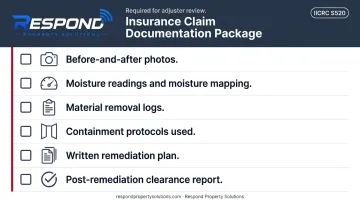
Comprehensive claim documentation should include:
- Before-and-after photos at each project phase
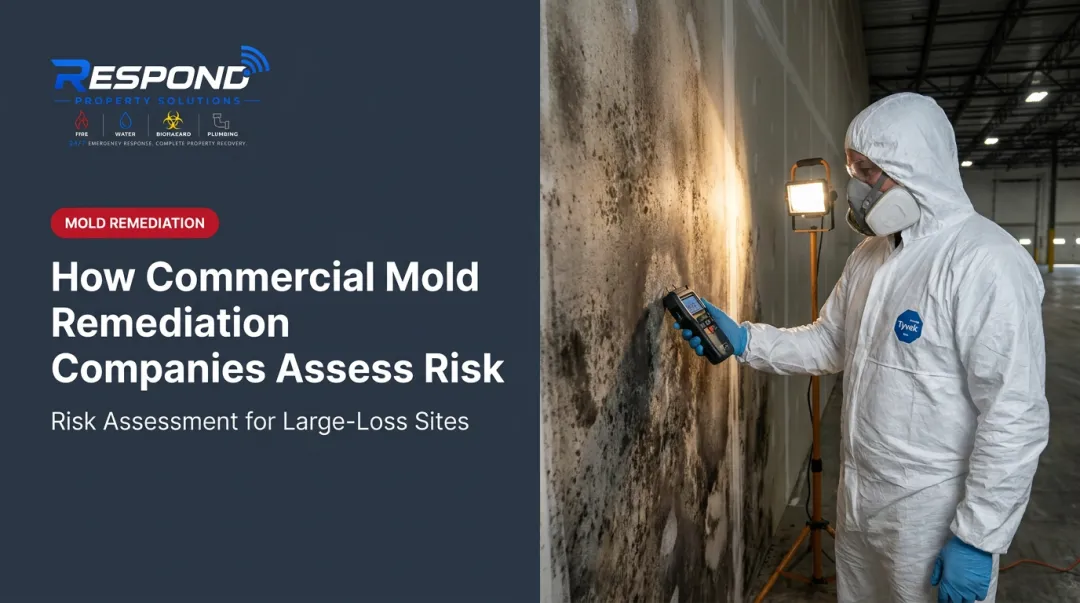
- Moisture readings and moisture mapping
- Material removal logs
- Containment protocols used
- Written remediation plan
- Post-remediation clearance report
All of this becomes evidence in your insurance claim file. If a company can't describe what their documentation package looks like, that's a red flag worth taking seriously.
Direct Adjuster Communication and Insurer Coordination
Thorough documentation only matters if someone acts on it. A company that communicates directly with adjusters—rather than handing you paperwork and walking away—reduces errors, delays, and coverage gaps. The adjuster gets clarifying information faster, and you're less likely to accidentally misrepresent scope or costs.
Look for explicit confirmation that the company:
- Has experience working with regional carriers in your area
- Can coordinate directly with your assigned adjuster
- Will flag documentation requirements unique to your insurer before work begins
Speed of Response and Mitigation Within the Policy Window
Mold starts growing within 24–48 hours of water exposure. A company with 24/7 dispatch and documented on-site arrival times protects both the property and the claim. For example, Respond Property Solutions operates five branches across Southern California and Arizona with 24/7/365 live dispatch and a 2–4 hour on-site response—so mitigation starts inside the policy window every time.
Ask prospective companies these three questions:
- What's your average response time? — Get a specific number, not "as fast as possible"
- When will mitigation be documented as having begun? — This timestamp matters for your claim
- How do you handle calls on holidays or overnight? — Live answer versus voicemail is a meaningful difference
A company that answers these confidently—with real numbers—is one that has actually managed claim timelines before.
Transparent Scope and Written Estimates
Always insist on a written, detailed estimate. It should specify:
- Which materials will be removed versus cleaned
- How containment will be established
- Whether and how the moisture source will be corrected
- What the clearance process involves
Vague or verbal scopes are one of the most common sources of insurance claim disputes. A written scope also protects you if the company later tries to expand the job beyond what was agreed.
Red Flags That Could Jeopardize Your Insurance Claim
Not every company that shows up after water damage is equipped to support an insurance claim. Watch for these warning signs:
- Quotes without a site inspection — flat per-room pricing produces underdocumented scopes insurers can dispute
- Can't produce IICRC certification on request — no certification means no recognized protocol compliance
- Won't address the moisture source — mold returns if the source isn't corrected, and insurers know it
- Offers only verbal assurances — nothing holds up in a claim file without written documentation
- Demands full payment upfront or uses high-pressure tactics — a pattern common among contractors who vanish before documentation is complete
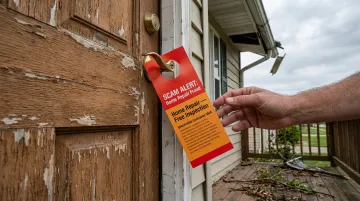
The NICB reported contractor fraud increased 38% from 2023 to 2025. After any major loss, contractors canvass affected neighborhoods — door-knocking, leaving flyers, sometimes showing up uninvited. If you didn't contact them first, treat it as a red flag until verified. Verify licensing, check local reviews, and confirm the company has a physical presence before signing anything.
How Respond Property Solutions Works With Your Insurance
Respond Property Solutions is an IICRC-certified disaster restoration provider serving Southern California and Arizona, operating under the QRV Network quality standard since 1991—a framework built around documentation, insurer coordination, and accountability that regional insurance carriers now reference in their Service Level Agreements.
For mold remediation specifically, a few operational details matter for insurance outcomes:
Every project is documented for adjusters from day one. Xactimate-compatible scopes, photo documentation, and direct adjuster communication are built into the standard workflow—not added on request. The free initial inspection uses thermal imaging and moisture mapping to produce an insurer-ready scope the property owner keeps regardless of whether they move forward with remediation.
Response times are designed to keep mitigation inside the policy window:
- Live dispatch answer within 45 minutes—no third-party call centers, no transfer queues
- Crew on-site within 2–4 hours from five branches across El Centro, Yuma, Redlands, Palm Springs, and Riverside
- Coverage across San Diego, Imperial, Riverside, San Bernardino, Orange, La Paz, and Yuma counties
A single project manager owns the job from first call through final walkthrough—scope development, insurer coordination, sub-trade scheduling, and clearance. One point of contact means accountability doesn't get lost between departments.
Respond serves homeowners, property managers, commercial properties, and large-loss accounts across the seven-county service area. For insurance professionals and adjusters, established carrier relationships and QRV Network compliance reduce friction from the first call forward.
Reach the team 24/7 at 866.867.3123.
Conclusion
Choosing a mold remediation company for an insurance-covered loss isn't the same decision as hiring a cleaning service. The right company produces documentation that holds up under adjuster review, begins work before the policy window closes, and communicates directly with the insurer to prevent scope disputes.
Before signing any remediation contract, run this checklist:
- Verify IICRC certification at both the firm and technician level
- Confirm Xactimate-compatible documentation is standard, not an add-on
- Ask directly how they coordinate with adjusters and what that process looks like
- Check state licensing and complaint history through your state's licensing board
- Require a written scope before any work begins
A company that checks every box above — IICRC-certified crews, Xactimate-compatible scopes, direct adjuster communication — removes the documentation burden from you and reduces the chance of a disputed or underpaid claim. Respond Property Solutions operates this way by default across every mold remediation job in Southern California and Arizona. The checklist isn't extra due diligence. It's the minimum standard worth holding any contractor to.
Frequently Asked Questions
How do I choose a mold remediation company that works with insurance?
Prioritize IICRC certification, Xactimate-compatible documentation, direct adjuster communication, and documented fast response. These four factors make the company's work legible and defensible to your insurer. Without them, even thorough remediation can fail to support a claim.
Should I tell my insurance company about mold?
If the mold stems from a covered water event, yes—report it promptly. Most policies require water damage to be reported as soon as possible after discovery, and delays can give insurers grounds to reduce or deny coverage. Review your specific policy language for any stated timeframe requirements.
Are mold remediation companies worth it?
For mold affecting building materials, professional remediation is necessaryand required if you want an insurance company to accept the claim. DIY approaches on porous materials like drywall typically fail post-remediation inspections and can void coverage.
Does homeowners insurance cover mold remediation?
Coverage depends on cause. Mold resulting from a sudden, covered event like a burst pipe is generally covered; mold from gradual leaks, seepage, or neglect typically isn't. As the NAIC notes, many standard homeowners policies offer limited or no mold coverage, so review your policy and any endorsements before filing.
What documentation does an insurance company need for a mold remediation claim?
Adjusters typically require before-and-after photos, moisture readings, a written remediation plan, a material removal log, containment protocols, and a post-remediation clearance report. Package these in an Xactimate-compatible format so the adjuster can review them directly.
What certifications should a mold remediation company have for insurance purposes?
IICRC AMRT (Applied Microbial Remediation Technician) and WRT (Water Damage Restoration Technician) are the most recognized credentials by insurers. Also confirm state licensing where required—Texas requires TDLR mold remediation licensing, while California and Arizona have different requirements—and verify the company carries mold-specific liability coverage.