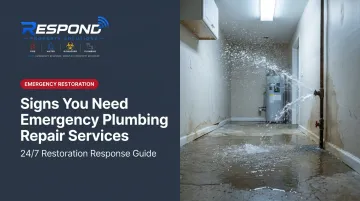
That next decision matters more than it seems. Calling for emergency help now versus waiting until morning can mean the difference between a $300 repair and a $15,000 water damage restoration project.
Not every plumbing problem is an emergency. A single dripping faucet can wait. But certain signs demand a same-day call — and knowing which ones cross that line is exactly what this article covers.
Key Takeaways
- Burst pipes, sewage backup, and gas-related odors are always call-now situations
- Multiple slow drains with foul odors often signal a failing main sewer line before full backup hits
- Mold can begin forming within 24–48 hours of water intrusion, so every hour of delay matters
- Loss of water pressure across an entire property, not just one fixture, qualifies as urgent
- Prompt action protects your insurance claim — delayed mitigation gives insurers grounds to dispute secondary damage
Why Early Recognition Protects Your Property
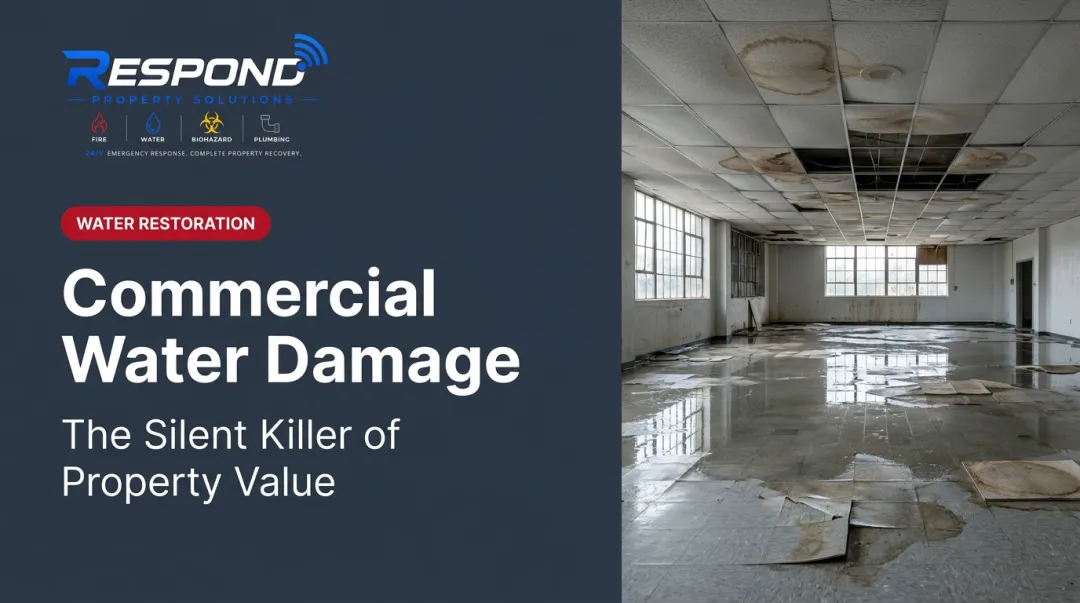
Water damage moves faster than most homeowners expect. The EPA confirms that mold colonies can begin growing on wet surfaces within 24–48 hours — so a pipe that bursts Saturday night and isn't addressed until Monday morning has already given mold a 36-hour head start. That gap costs you.
The Insurance Information Institute reports a $15,400 weighted-average claim severity for U.S. homeowner water damage and freezing claims across 2019–2023. Restoration projects routinely run between $1,383 and $6,378, with complex cases reaching $16,000 or more.
What makes this worse is how plumbing emergencies typically begin:
- A faint sulfur smell near a floor drain
- One toilet that drains a little slower than usual
- A brief drop in water pressure that resolves on its own
- A gurgling sound when the washing machine drains
These early signals are the cheapest intervention window. Ignore them long enough, and a $200 service call becomes a $6,000 remediation project.
For commercial properties, multi-family buildings, and rental units, the urgency compounds. A single unresolved plumbing failure can affect multiple tenants at once and trigger liability exposure. Property managers should set a lower threshold for calling emergency services than a single-family homeowner — the downstream costs of inaction are simply higher.
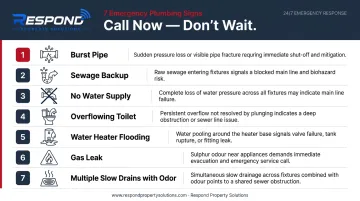
7 Signs You Need Emergency Plumbing Repair Right Now
These are the seven situations where waiting — even until the next business day — is the wrong call.
Burst Pipes or Rapidly Spreading Water Leaks
A burst pipe doesn't announce itself politely. You'll find water spraying from a wall, pooling fast across a floor, or a visible pipe that has split or separated at a joint.
The flow rates are startling: a half-inch pipe can release up to 50 gallons per minute, and a one-inch pipe can discharge 210 gallons per minute, according to utility estimates. A washing machine supply hose failure alone can leak 10–12 gallons per minute — over 12,000 gallons in a single day if left unaddressed.
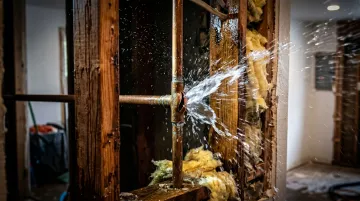
Your first move: Locate the shutoff valve nearest to the affected fixture and close it. If you can't find it quickly, close the main shutoff. Then call for emergency service immediately.
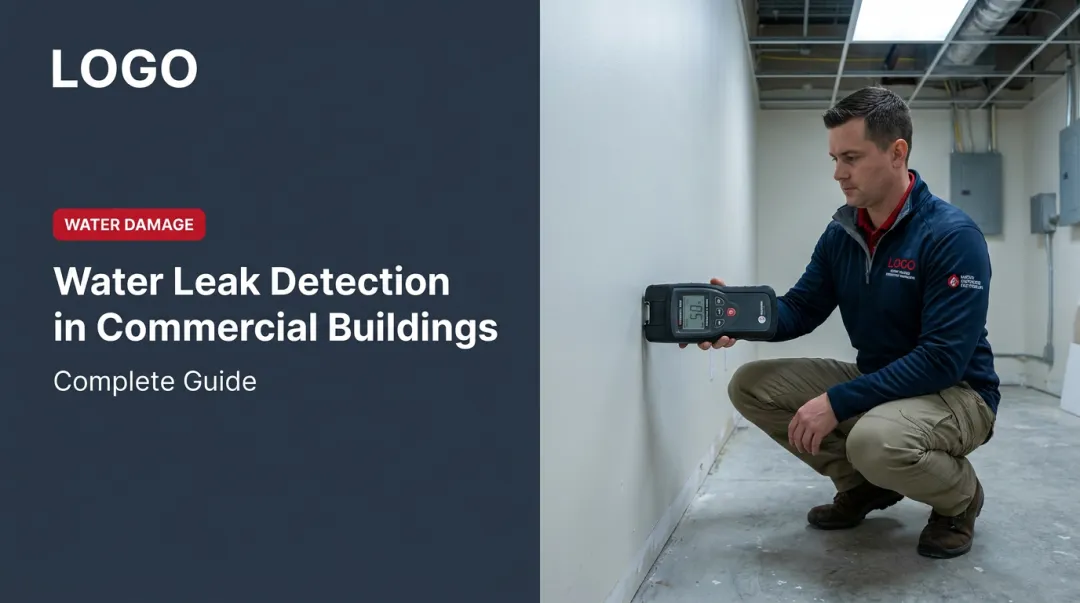
The hidden risk is what you can't see. Water migrates into wall cavities, insulation, and subfloor long before visible damage appears on the surface. A professional needs to assess the full extent — even after the flow is stopped — using moisture mapping and thermal imaging.
Sewage Backup Into Drains, Tubs, or Toilets
When wastewater reverses direction and surfaces in sinks, tubs, or toilets — particularly across multiple fixtures at the same time — this signals a main sewer line failure, root intrusion, or a severe blockage beyond any DIY fix.
Raw sewage carries serious health risks. The CDC and EPA confirm it can contain bacteria, viruses, protozoa, and molds linked to cholera, dysentery, and infectious hepatitis. Under IICRC standards, sewage-contaminated water is classified as Category 3 (black water) — requiring professional remediation protocols, not household cleanup.
The key distinction: A single toilet that won't flush is often a localized clog. Backup surfacing in a tub, sink, or second toilet simultaneously is always an emergency.
Complete Loss of Water Supply
If every faucet, toilet, and appliance in the building suddenly has no water — and a call to your local water utility confirms no municipal outage — the problem is isolated to your property.
Possible causes include a main line rupture, a failed shutoff valve, or a severe internal blockage. None of these have a DIY solution, and all of them require professional diagnosis to determine whether the issue is in your service line, your main shutoff, or deeper in the system.
Check with your utility first, then call an emergency plumber if the outage is property-specific.
Overflowing Toilet That Cannot Be Stopped
Every toilet has a shutoff valve at the base of the wall behind it. Turning it off stops most toilet overflows. When it doesn't — when the overflow continues despite closing that valve — the problem extends beyond the fixture into the main drain line.
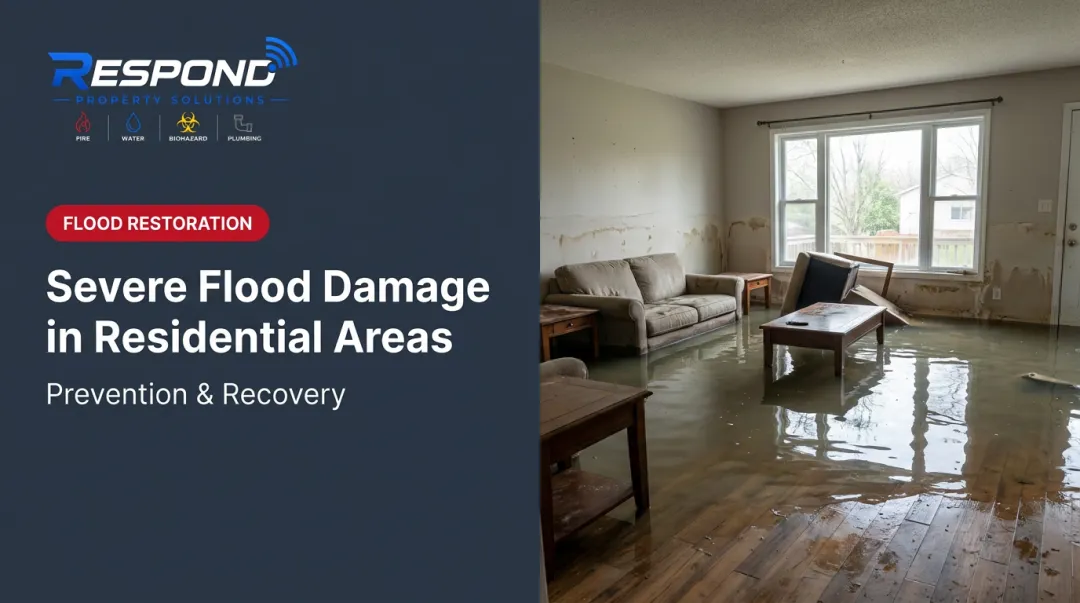
At that point, contaminated water is on your bathroom floor and actively migrating through grout, subfloor material, and into the structure beneath. The longer it sits, the more material becomes unsalvageable.
Flooding or Standing Water Near a Water Heater or Appliance
Water pooling around a water heater isn't just a nuisance. It may indicate:
- A failed temperature and pressure relief (T&P) valve
- A cracked tank
- A burst supply line
A.O. Smith's own installation manuals warn that a blocked or improperly functioning T&P relief valve can cause property damage, serious bodily injury, or death from explosion, and that discharged water may be hot enough to cause scalding. Treat any water heater flooding as a safety emergency and call for professional assessment immediately.
The same logic applies to washing machines and dishwashers — a burst supply hose behind either appliance can go unnoticed for hours in a utility area.
Suspected Gas Leak Connected to Plumbing
A rotten-egg or sulfur smell near gas-connected appliances or plumbing lines requires immediate evacuation — no exceptions. From a safe location outside the building, call 911 and your gas utility:
- SoCalGas (Southern California): 1-800-427-2200
- Southwest Gas (Arizona): 877-860-6020
Natural gas is odorless on its own; utilities add mercaptan specifically so leaks can be detected by smell. Do not re-enter the building, use light switches, or start a car in an attached garage until the utility clears the scene.
A different but equally serious concern is sewer gas escaping from floor drains or rarely-used fixtures. OSHA identifies hydrogen sulfide — a key component of sewer gas — as capable of causing unconsciousness and death at high concentrations. A persistent sulfur smell from drains, even without visible backup, warrants urgent professional inspection.
Multiple Slow Drains Combined with Persistent Foul Odors
One slow drain is usually a localized clog. Two or more fixtures draining slowly at the same time, paired with a sewage or sulfur smell, almost always points to a main sewer line in early failure.
This distinction matters because catching it at this stage costs a fraction of what a full sewage backup cleanup requires. Watch for this companion sign: gurgling sounds from a toilet or drain while another fixture is running. That sound is trapped air from a partial blockage working its way backward through the system — a reliable early warning.
Signs That Can Wait vs. Signs That Cannot
Not every plumbing issue justifies an emergency call. Here's a clear framework:
| Can Schedule Within Days | Call Now |
|---|---|
| Single dripping faucet | Active water spreading across floors or into walls |
| One slow drain, no odor | Two or more fixtures draining slowly with foul odor |
| Low hot water output from functioning heater | Sewage surfacing in any fixture |
| Toilet running between flushes | Complete loss of water supply |
| Minor fixture leak that's fully contained | Flooding near water heater or appliances |
Ask yourself four questions:
- Is water actively spreading?
- Does it affect more than one fixture?
- Is there a health or safety hazard?
- Is the property losing a core function — water supply or sanitation?
If you answered yes to even one, don't wait — call now.
For rental and commercial property managers, that threshold should be even lower. Every hour of delayed response adds tenant impact and liability exposure on top of the damage itself.
What Happens When You Delay
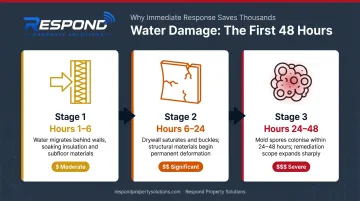
The cascade of secondary damage follows a predictable pattern:
- Hours 1–6: Water migrates into wall cavities, insulation, and subfloor. Visible damage understates actual saturation.
- Hours 6–24: Saturated structural materials begin warping. Drywall becomes unsalvageable. Insulation loses R-value and retains moisture.
- Hours 24–48: Mold colonization begins, per both the EPA and CDC. What started as a plumbing repair is now a remediation project.
There's also an insurance dimension. The National Association of Insurance Commissioners states that homeowners have a legal responsibility to protect property from further damage after a loss. Standard policy language requires insureds to make "reasonable and necessary repairs" promptly. Waiting until the next business day while active water intrusion continues can give insurers grounds to dispute the portion of damage that developed after the initial event but before mitigation began.
Respond Property Solutions starts damage documentation and adjuster coordination from the first call, using Xactimate-compatible scopes and photo documentation that establish pre-mitigation conditions. This creates a timestamped record of what existed at the time of the emergency, protecting your claim from scope disputes later.
What to Do the Moment You Spot a Plumbing Emergency
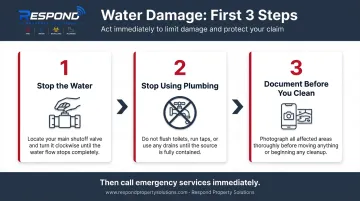
Three immediate steps, in order:
Stop the water. Close the shutoff valve nearest to the affected fixture. If you can't locate it or the flow doesn't stop, close the main shutoff for the property.
Stop using the plumbing system. Don't run faucets, flush toilets, or use appliances that drain. Running water worsens a sewer backup and can overwhelm a compromised line.
Document before you clean. Photograph or video the visible damage before anything is moved or wiped up. This documentation directly supports your insurance claim and establishes conditions before mitigation altered the scene.
Once the water is stopped, leave the repairs alone. Attempting to patch a burst pipe or clear a main sewer line without professional equipment can mask the full scope of damage — making professional diagnosis harder and more expensive when the crew arrives.
Respond Property Solutions provides 24/7/365 emergency response across Southern California and Arizona, with a live answer within 45 minutes and crews typically on-site within 2–4 hours from branches in Riverside, Palm Springs, Redlands, El Centro, and Yuma.
Call 866.867.3123 to reach a live dispatcher directly — you'll speak with someone local who can get a crew moving, not a transfer queue.
Frequently Asked Questions
What are signs of a serious plumbing issue?
Serious signs include sewage surfacing in drains or fixtures, multiple fixtures failing at once, active water spreading across floors or into walls, complete loss of supply, or foul odors combined with drainage failure across the property. A single dripping faucet or one slow drain without odor rarely qualifies.
How much does an emergency plumber visit cost?
Emergency plumber labor typically runs $100–$500 per hour, with holiday calls reaching $600. Service call fees average $100–$250 for the first hour. That upfront cost is nearly always lower than water damage restoration, mold remediation, or structural repair caused by waiting.
What should I do immediately when I notice a plumbing emergency?
Shut off water at the nearest valve or the main shutoff, stop using all plumbing fixtures, photograph visible damage before anything is moved, and call a 24/7 emergency plumber. Do not attempt repairs beyond closing the shutoff valve.
Can I wait until morning to call an emergency plumber?
Waiting is only reasonable if water flow is fully stopped, no contamination is present, and the issue affects a single non-critical fixture. For active leaks, sewage backup, flooding, or loss of water supply, overnight delay allows damage — and mold risk — to compound significantly.
Does homeowners insurance cover emergency plumbing repairs?
Most policies cover sudden and accidental water damage but exclude gradual leaks and maintenance neglect. Prompt response, photo documentation, and working with a restoration company that handles direct insurer coordination strengthens your claim and reduces disputes.