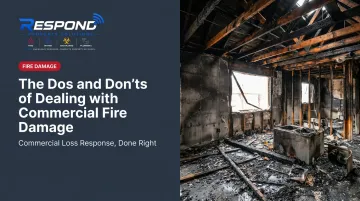
For hotels, apartment complexes, medical facilities, and industrial sites, a commercial fire rarely stays contained to the physical damage. Staff get sent home. Tenants lose access. Customers go elsewhere. The Allianz Risk Barometer consistently ranks fire and explosion as the largest single cause of corporate insurance losses by value — accounting for 21% of all corporate claims.
What separates a manageable recovery from a prolonged shutdown usually isn't the fire itself. It's the decisions made in the first hours after the flames go out. This guide covers exactly what to do — and what to avoid — from the moment fire authorities clear the scene.
Key Takeaways
- Wait for official clearance from the AHJ before entering — structural hazards remain invisible after a fire
- Document everything with photos and video before touching, moving, or discarding anything
- Notify your insurance carrier immediately; delays affect your claim
- Keep HVAC systems off until a qualified professional inspects them — activating them spreads soot through the entire building
- Call an IICRC-certified restoration company immediately — soot, smoke, and suppression water cause secondary damage within hours
What You're Actually Dealing With After a Commercial Fire
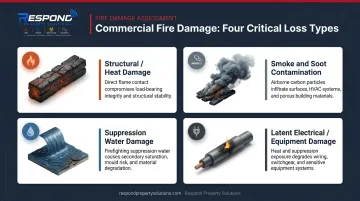
Most property managers focus on the burn damage. That's understandable — but it's only one of four distinct damage types that require attention simultaneously.
The Four Damage Pathways
| Damage Type | What It Means |
|---|---|
| Structural/heat damage | Heat weakens steel and cracks concrete even in areas flames never reached. NIST research confirms structural steel loses significant strength above 500°C |
| Smoke and soot contamination | Fine particulates travel far beyond the fire's origin through ductwork, ceiling plenums, and wall penetrations |
| Suppression water damage | Fire hoses and sprinklers saturate wall cavities, subfloors, and insulation — creating a 24–48 hour mold clock |
| Latent electrical/equipment damage | Components can appear intact while compromised by heat, moisture, or conductive soot particles |
None of these damage types wait for you to get organized. Soot and smoke residues are chemically reactive and corrosive to electronics, with measurable damage appearing within days of exposure.
Wet materials left standing compound the problem fast. EPA guidance on mold and moisture sets the drying window at 24–48 hours — meaning suppression water that soaks into a concrete subfloor on Monday can produce mold by Wednesday.
Water timing isn't the only invisible risk. Any fire affecting load-bearing walls, beams, flooring systems, or roof components can compromise structural integrity in ways that aren't visible on the surface. Heat exposure outside the fire's direct path still warrants professional evaluation before anyone re-enters.
The Dos: What to Do Immediately After Commercial Fire Damage
DO Wait for Official Clearance
Re-entry belongs to the Authority Having Jurisdiction (AHJ) or building official — not the property owner, not the manager, and not the insurer. FEMA's post-disaster safety guidance describes formal placard systems ("UNSAFE," "RESTRICTED USE") for a reason: a building that looks structurally sound may have compromised floor joists, heat-weakened columns, or toxic air quality from off-gassing materials.
Do not enter until you have formal clearance — even briefly.
DO Document Everything Before Touching Anything
Once you have clearance, photograph and video the full extent of damage before any cleanup begins — every room, every piece of equipment, every structural element. This documentation is the foundation of your insurance claim.
Key rules:
- Capture damage in every zone, not just the fire origin area
- Include undamaged areas adjacent to the fire zone (relevant for soot spread)
- Document equipment model numbers and serial numbers before anything is moved
- Written notes alongside visual documentation strengthen the record
Nothing gets moved, cleaned, or discarded until this step is complete.
DO Contact Your Insurance Carrier Immediately
ISO commercial property forms require "prompt notice" of loss — and a signed proof of loss within 60 days of the insurer's request. There's no universal 24- or 48-hour window in most policies, but the practical advice is the same: call your carrier and broker the moment you have clearance.
A restoration partner who produces Xactimate-compatible documentation and coordinates directly with adjusters can accelerate the claims process and reduce disputes. Respond Property Solutions assigns one project manager from the first call through final walkthrough, handling both the scope and adjuster communication so nothing falls through the gap between mitigation and rebuild.
DO Secure the Property Against Further Damage
An unsecured post-fire building is exposed to weather, vandalism, and theft — all of which complicate your claim. Emergency protective measures include:
- Board-up of breached windows and doors
- Temporary roof tarping where the roof has been compromised
- Utility shutoff confirmation with licensed professionals
- Perimeter security where access is a risk
Respond Property Solutions dispatches board-up and tarping crews 24/7/365, typically on-site within 2–4 hours across Southern California and Arizona.
DO Separate and Protect Salvageable Assets
Once documentation is complete, prioritize removing undamaged or minimally affected materials — but do this in coordination with your insurer. Business records deserve first priority: leases, contracts, financial records, insurance certificates.
Do not discard anything until the insurer has documented the loss. Even apparent total losses may need adjuster review before the adjuster authorizes removal.
DO Communicate Proactively With Stakeholders
Property managers need to notify employees, tenants, customers, and vendors quickly. Delays in communication create legal exposure and damage business relationships at the worst possible time.
A clear, factual communication — outlining what happened, current building status, and the recovery timeline — is better than silence. Identify one point of contact for ongoing updates, and stick to it.
The Don'ts: Critical Mistakes That Make Commercial Fire Damage Worse
Don't Enter the Building Before Official Clearance
This applies to owners and managers, not just employees. The urgency to assess damage personally is understandable — it's your property, your investment. But floor collapse, falling debris, and toxic air quality are real risks in buildings that look fine from the outside.
Wait for formal clearance from the Authority Having Jurisdiction (AHJ) — typically the fire marshal or incident commander — before anyone re-enters.
Don't Turn On HVAC Systems or Restore Power Without Inspection
Activating HVAC too early is one of the fastest ways to turn a contained fire loss into a building-wide contamination problem.
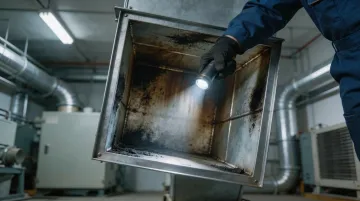
Activating an HVAC system post-fire distributes fine soot particles and smoke residue through ductwork into every zone of the building — including areas completely unaffected by the fire. NADCA's fire and water restoration guidance confirms that soot can enter HVAC systems even when the system is off, through return ducts, open fire dampers, and building pressurization. Turning it on guarantees widespread contamination.
Electrical systems carry a parallel risk. Heat and suppression water can compromise wiring, panels, and components that appear intact. NEMA's guidance on fire-damaged electrical equipment states clearly: do not re-energize without qualified evaluation.
Don't Touch Soot-Covered Surfaces or Attempt DIY Cleanup
Soot is not ordinary dirt. It's chemically reactive, and wiping it with bare hands or standard cleaning products can permanently embed it into porous materials and spread contamination further. IICRC S700 — the professional standard for fire and smoke restoration — addresses soot as a technical contaminant requiring specialized assessment, techniques, and equipment.
Professional soot removal requires:
- Residue type identification before any cleaning begins
- Containment protocols to prevent cross-contamination
- Material-specific cleaning methods for walls, contents, and equipment
- Documentation of affected zones before and after
DIY attempts don't just fail to clean — they make professional remediation harder and more expensive. The same logic extends to how you handle damaged contents: what you do (or discard) before the adjuster arrives has direct consequences for your claim.
Don't Discard Damaged Items Before Insurance Documentation Is Complete
Once items are thrown away, they can't be assessed by an adjuster. That loss is permanent and reduces your claim value. Even contents that appear to be obvious total losses (charred furniture, smoke-saturated equipment) may require adjuster review or third-party inspection before removal is authorized.
Hold everything until the insurer confirms what can be disposed of.
Don't Authorize Permanent Repairs Before the Adjuster Completes the Assessment
Beginning permanent reconstruction before an insurance adjuster evaluates the full damage scope can invalidate portions of a claim.
There's a clear line here:
- Acceptable before adjuster sign-off: Emergency board-up, roof tarping, water extraction, and utility isolation
- Wait for adjuster sign-off: Structural reconstruction, permanent repairs, surface refinishing, equipment replacement
Emergency stabilization protects the asset and is expected. Permanent repairs are a separate category — starting them early creates scope disputes that delay settlement.
Hidden Threats That Outlast the Flames
Three secondary damage risks deserve specific attention because they're easy to underestimate and expensive when they're not addressed quickly.
Suppression water from sprinklers, hoses, and suppression systems saturates insulation, subfloors, wall cavities, and structural framing. Industrial-grade extraction and drying must begin within 24–48 hours to stay ahead of mold. Once mold establishes in structural cavities, remediation costs can escalate into five-figure territory fast.
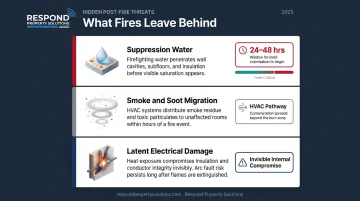
Smoke and soot migration travels through HVAC ductwork, ceiling plenums, and wall penetrations far beyond the fire's origin zone. Spaces that appear clean may still contain fine particulate matter — a health hazard and an ongoing corrosion risk.
HVAC systems often require full inspection, cleaning, and sometimes replacement. A filter swap won't cover it.
Latent electrical and equipment damage is the least visible risk. Components can look intact while internally compromised by heat, moisture, or conductive soot particles. Powering up equipment without a professional inspection risks further damage, safety incidents, and voided warranties.
On any commercial fire job, treat all three as present until a professional assessment rules them out.
How to Choose the Right Commercial Fire Damage Restoration Partner
Choosing a restoration partner for a commercial fire isn't the same as hiring a contractor for routine repairs. The criteria that matter:
- IICRC certification — Look for technicians certified to IICRC S700 (fire and smoke) and S500 (water damage), not just a general "certified" claim
- Single project manager accountability — No handoffs between mitigation and reconstruction mean no gaps in documentation or scope
- Commercial-scale experience — Multi-tenant, multi-story, and large-loss fires have different logistical requirements than residential jobs
- Insurer coordination capability — Xactimate-compatible documentation and direct adjuster communication from day one reduces disputes and accelerates settlement
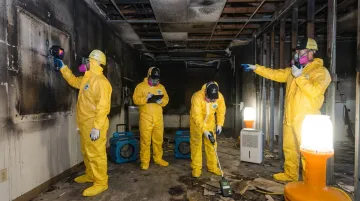
For commercial properties, delays between restoration phases carry a concrete price: extended business interruption, displaced tenants, and lease obligations that don't pause while walls are being rebuilt.
Respond Property Solutions operates specifically for commercial and large-loss fire response across Southern California and Arizona. Core capabilities include:
- IICRC-certified crews dispatched 24/7/365, on-site within 2–4 hours
- One project manager from first call to final walkthrough — no handoffs
- Xactimate-compatible documentation with direct adjuster communication
Five branches — El Centro, Yuma, Redlands, Palm Springs, and Riverside — cover San Diego, Imperial, Riverside, San Bernardino, Orange, La Paz, and Yuma counties.
That gap between fire clearance and the start of professional mitigation is often the most consequential window — and it's almost entirely preventable. Identifying a restoration partner before a fire happens, as part of an emergency response plan, eliminates the scramble when it matters most. Respond offers free Pre-Loss Planning for commercial portfolios specifically for this reason.
Frequently Asked Questions
What is the biggest cause of fires in commercial premises?
According to USFA national data, cooking equipment accounts for 30.3% of nonresidential building fires — making it the leading cause overall. Other common contributors include intentional fires (13%), unintentional or careless acts (12.6%), electrical malfunctions, and improper storage of flammable materials.
What does a commercial structure fire mean?
A commercial structure fire is one that affects the structural components of a building — load-bearing walls, beams, flooring systems, and roof assemblies. Unlike content-only fires, it can compromise the building's physical integrity and typically requires structural evaluation and reconstruction alongside cleanup.
Does fire insurance cover structural damage?
Most commercial property insurance policies cover structural fire damage, but coverage limits, exclusions, deductibles, and ordinance-or-law provisions vary by policy. Review your terms carefully and notify your carrier with full documentation as soon as possible after the incident.
How long does commercial fire damage restoration take?
Timelines depend on structural damage severity, smoke and water infiltration scope, and how quickly mitigation begins. Minor fires may resolve in days to a few weeks; large-loss events involving structural reconstruction often take several months.
Can I reopen my business while fire damage restoration is in progress?
Partial operations are sometimes possible if undamaged areas can be safely isolated — but only after structural clearance, air quality testing, and utility confirmation. Coordinate any phased reopening with your restoration team and insurer to stay compliant with your claim.
What secondary damages should I watch for after a commercial fire?
The main secondary risks are mold growth from suppression water (within 24–48 hours), soot corrosion affecting metal surfaces and electronics, smoke contamination spreading through HVAC systems, and latent electrical hazards. All worsen rapidly if professional mitigation is delayed.