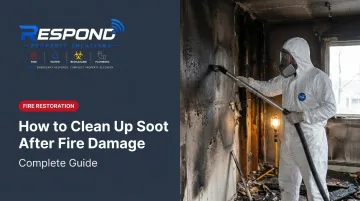
The wrong cleanup approach makes things worse. Wiping soot with water before dry removal, running the HVAC system, or using the wrong cleaner can spread contamination into areas that were never directly affected by the fire.
This guide covers what soot actually is, how to identify which type you're dealing with, a step-by-step cleanup process, surface-specific techniques, common mistakes to avoid, and clear thresholds for when to call a certified professional.
Key Takeaways
- Soot is acidic and causes ongoing structural damage after a fire — start cleanup as quickly as possible
- Four soot types (dry, wet/oily, protein, petroleum) each require a different cleaning method — wrong method spreads contamination
- DIY cleanup only works for minor, surface-level dry soot on non-porous materials in a single small area
- Turn off all HVAC systems immediately after a fire — running them circulates soot through every room
- Call an IICRC-certified professional when soot covers more than one room, involves HVAC or electronics, or insurance documentation is required
What Is Soot and Why Does It Demand Immediate Action?
Soot is not just black dust. According to the National Cancer Institute, soot is a byproduct of incomplete burning of organic, carbon-containing materials — including wood, fuel oil, plastics, and household refuse — and may contain carcinogens including arsenic, cadmium, and chromium. It's a complex mix of fine particulates, acids, heavy metals, and chemical compounds that remain chemically active after the fire is out.
The Damage Timeline
Soot begins causing permanent damage almost immediately:
- Within minutes: Acid residues yellow plastics and discolor porous materials
- Within hours: Grout stains, fiberglass yellows, uncoated metals begin tarnishing
- Within days: Painted walls yellow, metal corrosion accelerates, wood furniture may require refinishing
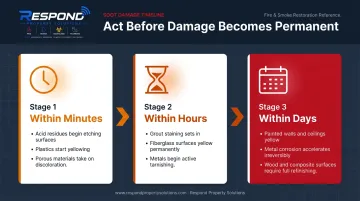
Every hour of delay expands the scope — and cost — of restoration. Cleanup cannot wait.
Health Risks
Soot exposure carries serious health consequences. The EPA links particulate matter exposure to aggravated asthma, decreased lung function, airway irritation, irregular heartbeat, and premature death in people with heart or lung disease.
Children, older adults, and those with pre-existing respiratory conditions face the greatest risk. The NTP's 15th Report on Carcinogens classifies soots as known human carcinogens.
Anyone entering a soot-affected space — even briefly — should wear an N95 respirator, gloves, and eye protection.
Types of Soot After a Fire (and Why It Matters for Cleanup)
Before touching anything, identify which soot type you're dealing with. Using the wrong removal technique doesn't just fail to clean — it spreads residue deeper into surfaces and drives up restoration costs.
Dry Soot
Dry soot comes from fast-burning, high-temperature fires fueled by wood or paper. It has a powdery, lighter appearance and is the most manageable type when addressed quickly. Always start with dry removal methods — HEPA vacuuming and dry chemical sponges — before any wet cleaning. Introducing moisture too early turns dry soot into a smearing problem.
Wet/Oily Soot
Wet/oily soot is the thick, greasy residue left by slow-burning fires involving plastics, rubber, and synthetic materials. It's common in structural fires where furniture, electronics, and drapes are involved. Standard household cleaners don't remove it — they spread it. Specialized chemical solvents and degreasers are required.
Protein Residue
Protein residue from kitchen fires forms a nearly invisible film — easy to overlook, hard to eliminate. It causes severe, persistent odors and gradual yellow discoloration on painted surfaces and wood. Because there's little visible evidence, it's frequently missed entirely during DIY cleanup. Professional enzymatic treatments are typically required for full removal.
Petroleum/Fuel Oil Soot
Petroleum soot is a dense, sticky residue from furnace malfunctions or oil-based fires. It spreads rapidly through HVAC ductwork, contaminating rooms far from the fire source. Surface cleaning alone won't resolve it. Full HVAC system decontamination is almost always required alongside structural cleanup.
How to Clean Soot After Fire Damage: Step-by-Step
Before starting: Confirm emergency services have cleared the property as structurally safe. Put on PPE — N95 respirator, nitrile gloves, and eye protection. Turn off all HVAC systems immediately.
Step 1: Contain the Affected Area
- Close all interior doors to isolate soot-affected rooms
- Seal openings to unaffected areas with plastic sheeting
- Remove furniture and valuables if safely possible
- Photograph all damage thoroughly before touching any surface — this documentation is critical for insurance claims
Step 2: Begin With Dry Removal
Moisture activates oily soot residues, causing them to smear and penetrate deeper. Dry removal always comes first.
- Use a HEPA-filtered vacuum on all loose surface soot (not a standard household vacuum, which recirculates fine particles back into the air). LA County Public Health specifically advises against shop vacs and regular vacuums for fire ash cleanup for this reason
- Use a dry chemical sponge on walls and ceilings in gentle, overlapping strokes working top-to-bottom
- Never scrub — cut off soiled sponge sections rather than rinsing them
Step 3: Apply the Correct Cleaning Solution
Match the cleaning agent to the soot type identified:
| Soot Type | Recommended Cleaner |
|---|---|
| Dry soot (hard surfaces) | Diluted degreaser or mild dish soap solution |
| Wet/oily soot | Specialized chemical solvent |
| Protein residue | Enzymatic cleaner |
| Petroleum soot | Grease-cutting commercial solvent |
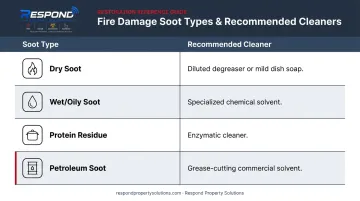
Always spot-test on a hidden surface first. Apply with a soft cloth in small sections, wiping gently. Never saturate porous surfaces like drywall — moisture drives soot deeper and creates mold conditions.
Step 4: Address HVAC and Air Systems
Soot inside ductwork will recontaminate the entire property every time the system runs. Two actions are required before the HVAC is reactivated:
- Professional duct cleaning: Commercial-grade equipment is needed to clear soot from ductwork safely. This isn't a DIY task.
- HEPA air scrubbers: Deploy these during cleanup to capture airborne soot particles and reduce exposure for anyone working in the space.
Step 5: Neutralize Odors
Removing visible soot does not eliminate smoke odor. Smoke molecules are chemically embedded in walls, insulation, furnishings, and fabrics. Airing out the space helps, but it won't solve the problem.
Professional odor elimination uses:
- Ozone generators — neutralize odor molecules, but only usable in unoccupied spaces
- Hydroxyl generators — break down odor molecules and can be used in occupied spaces
- Thermal fogging — penetrating deodorization that reaches cavities surfaces alone can't address
These methods require professional equipment and training. Respond Property Solutions' IICRC-certified crews serve Southern California and Arizona with commercial-grade deodorization as part of full fire damage restoration, dispatching 24/7/365 with crews on-site within 2–4 hours.
Surface-by-Surface Soot Cleanup Guide
Different materials require different approaches. The wrong method on the wrong surface can cause permanent damage that the soot itself never would have.
Walls and Ceilings
Dry wipe with a chemical sponge first, working top-to-bottom. Follow with a diluted degreaser applied with a soft sponge in small sections. Avoid saturating drywall — it drives soot deeper and creates mold conditions. Pat dry with a lint-free cloth and ventilate with open windows and fans.
Brick, Concrete, and Masonry
Dry brush and HEPA vacuum to remove loose soot first. Apply a masonry-safe cleaner with a stiff brush in circular motions, then rinse thoroughly. Low-PSI power washing works for exterior surfaces — avoid high pressure, which erodes mortar and pushes stains deeper. Deeply stained porous masonry often requires professional restoration.
Wood, Metal, and Hard Floors
- Wood: Use a wood-safe cleaner on a soft cloth; minimize moisture to prevent warping; sand and refinish if soot caused permanent discoloration
- Metal: Apply soot-specific cleaner in circular motions, then dry and buff immediately to prevent rust and oxidation
- Hard floors (tile, hardwood, laminate): HEPA vacuum first, apply a neutral cleaner, rinse, and dry thoroughly to avoid streaking or water damage
Fabrics, Upholstery, and Carpets
- Shake loose debris outside first
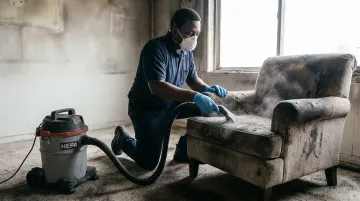
- HEPA vacuum upholstery and carpets using slow, methodical passes
- Spot-treat stains by blotting — never rubbing — with a soot-safe fabric cleaner
- Use steam cleaning or hot-water extraction for carpets
Critical warning: Never place soot-stained fabrics or garments in a dryer before cleaning. Heat permanently sets soot stains into fibers.
Electronics and HVAC Components
Do not attempt to clean electronics yourself. Soot is electrically conductive and corrosive inside equipment: improper handling can cause short circuits, current leakage, and secondary damage that exceeds the original fire loss. Have a certified professional assess all electronics and mechanical systems before any cleaning or reactivation attempt.
Common Soot Cleanup Mistakes and When to Call a Professional
Starting With a Standard Vacuum or Wet Wipe
Standard vacuums lack proper filtration and blow fine soot particles back into breathing air. Water activates oily residues, turning manageable soot into a smeared, deeply penetrated problem. The rule is non-negotiable: always start dry with HEPA equipment before any wet method.
Turning the HVAC System Back On Too Soon
This instantly circulates soot through every duct and room in the property, spreading contamination far beyond the original fire zone. Every air handler stays off until ductwork has been professionally inspected and cleared.
Grabbing the Wrong Cleaner — or Skipping the Spot Test
Harsh chemicals strip finishes. Mild cleaners fail to cut through wet or petroleum soot. Every cleaner — regardless of where it came from — should be spot-tested on a hidden surface first, and matched specifically to the soot type present.
When to Call a Professional
Engage a certified restoration company when any of the following apply:
- Soot affects more than one room
- Odors persist after initial cleanup
- HVAC systems or electronics are involved
- Structural materials are affected
- Formal insurance documentation is required
Respond Property Solutions dispatches IICRC-certified crews across Southern California and Arizona, with a live answer in 45 minutes and crews on-site within 2-4 hours. One project manager handles the job from first call to final walkthrough, with Xactimate-compatible documentation and direct coordination with your insurance adjuster. Available 24/7/365 at 866.867.3123.
Frequently Asked Questions
How much does professional soot cleanup cost?
Cost varies based on affected square footage, soot type (wet and petroleum soot jobs cost significantly more than dry soot), whether HVAC cleaning is needed, and how quickly cleanup begins. Most standard property insurance policies cover soot damage, so your out-of-pocket cost depends on your coverage and how well the damage is documented.
How is professional soot cleanup performed?
The standard process includes:
- Damage assessment and containment
- HEPA air filtration and surface cleaning matched to soot type
- HVAC decontamination
- Odor neutralization (ozone, hydroxyl, or thermal fogging)
- Final air quality verification before reoccupation
How long does soot stay in the air after a fire?
Fine soot particles under 1 micron can remain suspended for hours to days depending on ventilation. Without HEPA air scrubbers, particles settle onto surfaces and become airborne again with foot traffic, prolonging exposure risk well past the initial cleanup period.
Can I clean soot myself, or do I need a professional?
DIY is only appropriate for very minor, surface-level dry soot on non-porous materials in a single small area. Anything beyond that — multiple rooms, wet or oily soot, fabrics, or HVAC systems — requires professional equipment to avoid spreading contamination further.
Does homeowners insurance cover soot cleanup?
Most standard homeowners and commercial property policies cover soot and smoke damage caused by a sudden fire event, including cleaning, odor removal, and content restoration. Getting professional documentation in place before any cleaning begins protects your claim and ensures nothing is missed during the adjuster review.
What are the health risks of soot exposure?
Soot exposure causes respiratory irritation, aggravates asthma and COPD, and irritates eyes and skin. Soot is classified as a known human carcinogen. Children, elderly individuals, and those with pre-existing heart or lung conditions face the greatest risk from even brief exposure.